


Moringa and Blood Sugar: An Honest Look at the Research
Blood Sugar · What the Research Shows
We Sell Moringa. We'll Still Show You Where the Evidence Stops.

You typed "does moringa lower blood sugar" into a search bar, and you have probably already met the two unhelpful answers: the pages that call it a miracle, and the pages that shrug. The truth sits between them, and it is far more useful than either. In human studies, moringa leaf shows a real effect on blood sugar. The part almost no one explains is who that effect shows up in, and when, and once you see the pattern, moringa finally makes a lot more sense.
Here is what the research actually found, who it was tested on, and how to use moringa honestly if blood sugar is on your mind. We sell moringa, so you have every reason to be skeptical of us. That is exactly why we are going to show you the studies, tell you precisely who they were run on, and be straight about where the evidence is strong and where it runs out.
Does moringa lower blood sugar?
That is the short version. The longer version is where it gets genuinely useful, because the human trials were run on very specific groups of people.
What did the human studies actually find?
The after-meal study Human study
The prediabetes trial Human study
Both results point the same direction. Both are also small, and one tested a single meal rather than months of use. That is the honest shape of the evidence.

Does moringa do anything for blood sugar if you are not diabetic?
Read that again, because it is the part the supplement aisle hides. In the people whose blood sugar was already healthy, moringa did almost nothing to it. That is not a flaw in moringa. That is the point. A whole food nudging an out-of-range number back toward normal, and leaving a normal number alone, is exactly how a food should behave. If your blood sugar is already in a healthy range, moringa is still a genuinely nutrient-dense leaf worth eating. Just do not expect it to push a normal number lower, and be skeptical of anyone who promises it will.

How might moringa affect blood sugar?
One is chlorogenic acid, found in the leaf, which has been studied for how it affects the way carbohydrates are absorbed after a meal. The leaf also contains isothiocyanates, compounds studied in laboratory and animal research for their role in supporting the body's own antioxidant enzymes. And whole moringa leaf is a source of dietary fiber, a recognized part of a blood-sugar-friendly plate.
The plain-English version: the leaf seems to help slow how fast sugar from a meal hits your bloodstream, and it brings antioxidant compounds along for the ride. Your body is doing the work. The leaf is a nudge, not a switch.
One accuracy note that matters for what you buy: these are leaf compounds. They are in the dried leaf you take as powder, capsules, or tea. They are not in the seed oil used for skin. When research talks about moringa and blood sugar, it means the leaf, not the seed, and we explain the difference between the leaf and the seed in its own guide.
How moringa may affect blood sugar, at a glance
| What's in the leaf | How it may help after a meal | Evidence so far |
|---|---|---|
| Dietary fiber | Slows how fast sugar from a meal enters your blood | Recognized role of fiber |
| Chlorogenic acid (a leaf polyphenol) | Studied for how carbohydrates are absorbed after eating | Early human and lab studies |
| Isothiocyanates | Studied for supporting the body's own antioxidant enzymes | Lab and animal only |
Whole leaf powder or extract: which did the research use?
This matters the moment you go to buy. Labs often use extracts because isolating one compound is how lab science works. But the blood sugar studies that got results in people used the whole leaf, with its full mix of fiber, vitamins, minerals, and plant compounds working together. An extract keeps one fraction and discards the rest.
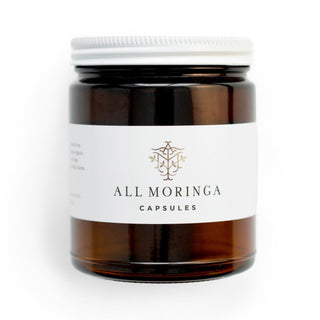
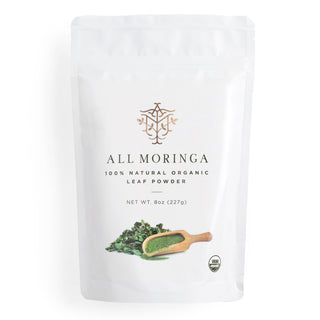
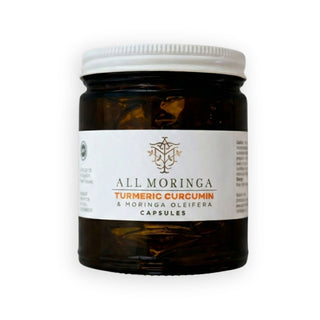
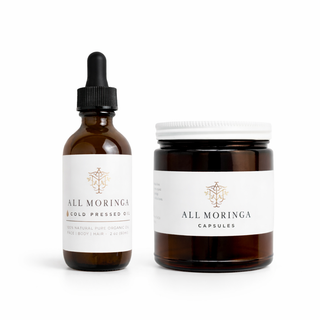
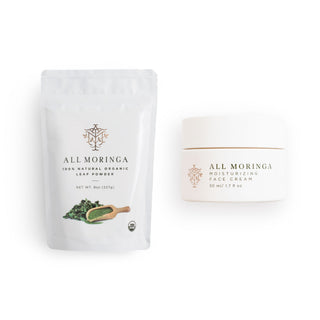
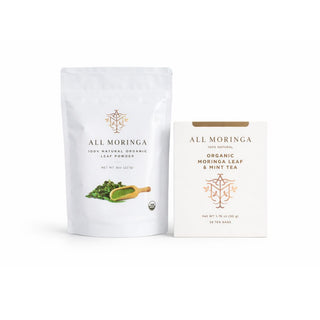
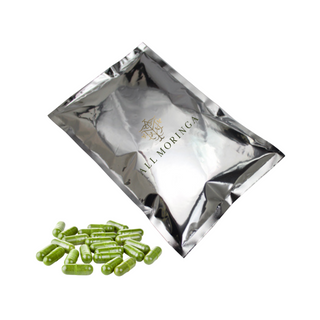
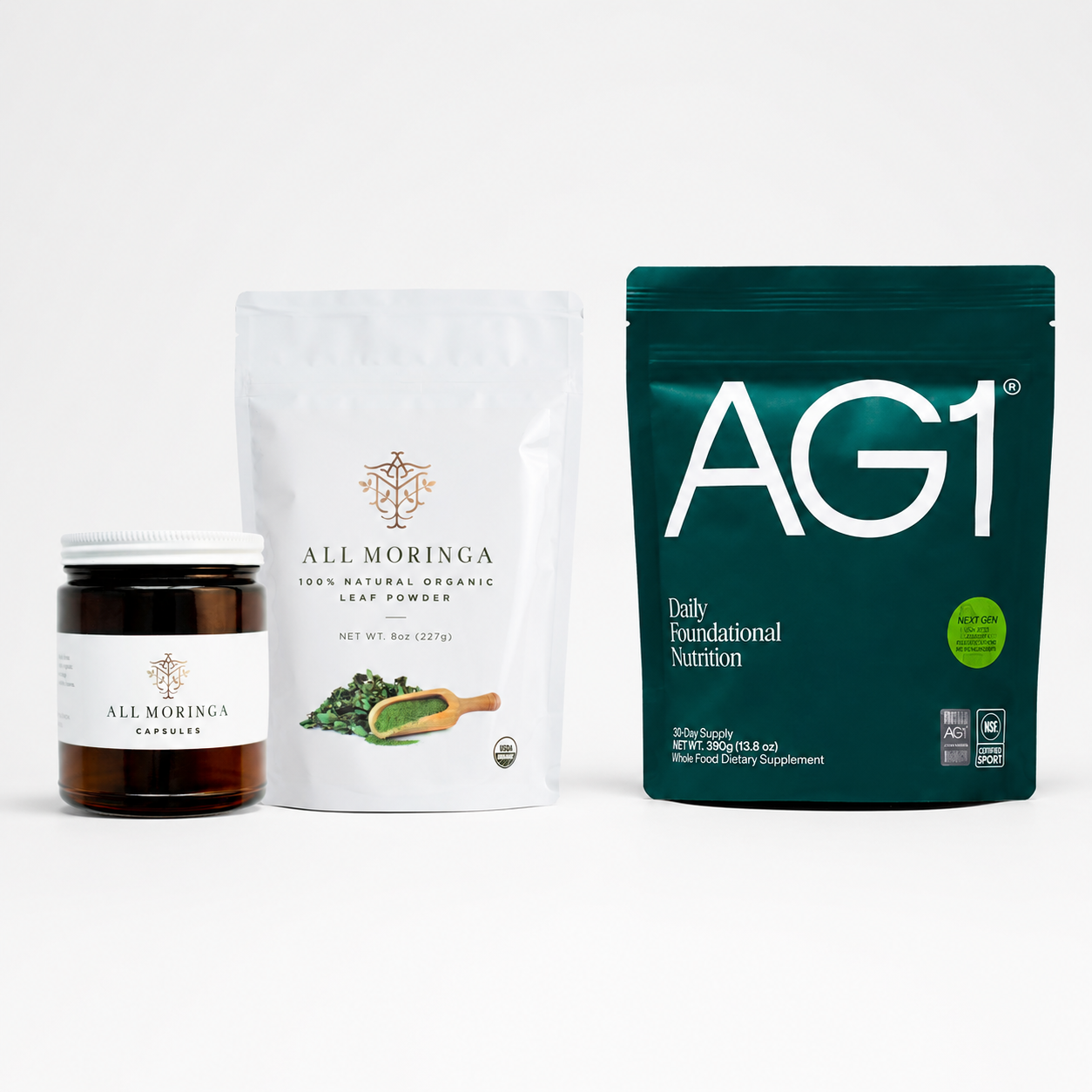
So you can buy the thing the research actually tested. Our Moringa Leaf Powder is exactly that: pure dried moringa leaf, nothing isolated and nothing diluted into a long ingredient list. If you would rather not taste it, our Moringa Capsules are the same whole leaf in the capsule form the prediabetes trial happened to use.
How did people in the studies take moringa?
The after-meal study used 20 grams of leaf powder with a meal (PMC6213450). The prediabetes trial used a daily leaf powder supplement across 12 weeks (Nutrients, 2022).
The practical takeaway most people land on is simple: take moringa with food, ideally your most carb-heavy meal, since the after-meal window is where the research signal is strongest. What amount is right for you is a conversation for you and your doctor, especially if blood sugar is something you actively manage.
Can you take moringa with diabetes medication?
Because moringa is being studied for a blood-sugar effect, stacking it on top of insulin or other glucose-lowering medication could add up in ways you want a professional watching. If you take any diabetes medication, get your doctor's input before adding moringa, and keep monitoring the way you already do. Supportive, not a substitute.
So is moringa worth trying for blood sugar?
That is a fair verdict. The signal is real and consistent enough to take seriously, and not strong enough to overpromise.
If moringa appeals to you for blood sugar, the sensible path is the honest one. Use the whole leaf as part of a balanced diet and an active life, take it with your meals, keep your doctor in the loop, and judge it by your own numbers over time. That is how a food earns a place in your routine. If that is the approach you want, our whole-leaf Moringa Leaf Powder is a straightforward place to begin.
The honest bottom line
Moringa leaf is not a blood sugar drug, and the research does not pretend it is. What the studies show is a modest, real, after-meal effect in people whose blood sugar is already high, using the whole leaf. That is a smaller claim than the internet makes, and a more trustworthy one. We would rather tell you the true, smaller thing than sell you the false, bigger one.
Start with the whole leaf
If blood sugar is on your mind, the honest place to begin is the same whole-leaf moringa the research tested, taken with your meals and alongside your doctor's guidance.
Frequently asked questions
Scientific references
All Moringa believes in transparency. Below are the peer-reviewed studies referenced in this article, so you can read the science yourself.
After-meal (postprandial) glucose, acute meal study. Randomized crossover test in 27 Saharawi adults (17 with type 2 diabetes, 10 healthy), 20 grams of moringa leaf powder with a meal. PMC6213450
Prediabetes glycemic-control trial. Double-blind, randomized, placebo-controlled trial in adults with prediabetes, 2,400 mg/day moringa leaf powder over 12 weeks. Nutrients, 2022, 14(1):57. doi.org/10.3390/nu14010057
Systematic review of moringa and glucose control. Review of 33 animal and 8 human studies, concluding human evidence is "limited but promising, especially that coming from postprandial studies." PMC7400864
With care,
Tzvi and the All Moringa Family

*This statement has not been evaluated by the Food and Drug Administration. This product is not intended to diagnose, treat, cure, or prevent any disease.
Leave a comment
This site is protected by hCaptcha and the hCaptcha Privacy Policy and Terms of Service apply.