

Does Moringa Have Vitamin D, B12 & Other Nutrients? The Complete Facts
Does Moringa Have Vitamin D or B12? The Honest Answer
Moringa leaf powder does not contain vitamin D or vitamin B12. USDA FoodData Central confirms both: 0 IU of vitamin D and 0 micrograms of B12 per serving. These are not gaps unique to moringa. Vitamin D is synthesized by animals and certain fungi, not by plants. Vitamin B12 is produced by bacteria, not by any plant on earth. That is why neither nutrient appears in moringa or in any other leafy plant food.
But those two absences tell only a small part of the story. What moringa leaf actually contains, and what the peer-reviewed research has documented about its nutritional breadth, is genuinely impressive. This article gives you the full picture: what moringa has, why it lacks vitamin D and B12, how to correctly read the "92 nutrients" claim, and what the science says about the "300 diseases" figure.
What Moringa Is Genuinely Rich In
According to USDA FoodData Central, dried moringa leaf powder contains notable concentrations of the following nutrients, each with recognized biological roles in human health:
| Nutrient | Known Biological Role |
|---|---|
| Vitamin A (beta-carotene) | Vision, immune function, skin cell maintenance |
| Vitamin C | Collagen biosynthesis, antioxidant protection, immune support |
| Vitamin E (tocopherols) | Lipid-soluble antioxidant protecting cell membranes from oxidative damage |
| B Vitamins (B1, B2, B3, B6) | Energy metabolism, nervous system function, red blood cell production |
| Iron | Oxygen transport, energy metabolism, immune cell production |
| Calcium | Bone and tooth structure, muscle contraction, nerve signaling |
| Potassium | Fluid balance, heart rhythm, muscle function |
| Magnesium | Enzyme function, muscle and nerve activity, energy production |
| Complete Protein (all 9 essential amino acids) | Tissue repair, enzyme production, neurotransmitter synthesis |
Beyond vitamins and minerals, moringa leaf contains a class of sulfur compounds called isothiocyanates, the same family studied extensively in broccoli. The primary one, glucomoringin, converts to the active form moringin when the leaf is chewed or processed. These compounds have been studied for their role in supporting antioxidant enzyme activity, and a randomized controlled trial published in MDPI Nutrients (2022) observed improvements in blood glucose and inflammatory markers in prediabetic adults supplementing with moringa leaf powder.
Moringa leaf also contains zeatin, a cytokinin found at concentrations thousands of times higher than in most plants, and polyphenols including quercetin, kaempferol, and chlorogenic acid. For a full breakdown of these moringa antioxidant compounds, we have a dedicated article covering the research behind each one.
What makes this profile meaningful is not just the length of the list. It is the form. When you consume whole moringa leaf powder, these nutrients arrive together in the natural ratios the plant assembled, nothing isolated, nothing extracted from a lab. Your body recognizes this as food, which is exactly how moringa has been consumed in traditional diets across Africa, South Asia, and Southeast Asia for centuries. For the complete per-gram nutritional breakdown, see our full article on moringa's nutrient spectrum.
Common Claims: What the Research Actually Shows
Moringa is one of the most marketed plants in the wellness space, and some of what circulates deserves a direct check against the evidence. Here is a quick-reference summary of the four most common claims, with what the peer-reviewed literature actually says:
| The Claim | What the Research Shows | Source |
|---|---|---|
| Moringa contains vitamin D | False. Plants do not synthesize vitamin D. Moringa leaf powder contains 0 IU per serving. | USDA FoodData Central |
| Moringa contains vitamin B12 | False. No plant produces bioavailable B12. Moringa records 0 mcg per serving. | USDA FoodData Central; Watanabe F., 2007 |
| Moringa has 92 nutrients | Confirmed with context. Peer-reviewed literature documents approximately 96 nutrients and 46 antioxidants. The "92" figure is a close approximation of this finding, not an invention. | Fahey JW, 2005; Mishra et al., Der Pharma Letter, 2011; MDPI Nutrients, 2024 |
| Moringa treats 300 diseases | This reflects centuries of traditional use in Ayurvedic and West African medicine. It is not established by human clinical trials. Traditional use and clinical proof are not the same. | Fahey JW, 2005 |
Why Moringa Has No Vitamin D
Vitamin D3 (cholecalciferol) is synthesized in animal and human skin through ultraviolet light exposure. Vitamin D2 (ergocalciferol) is produced by certain fungi exposed to UV light. Neither form is manufactured by leafy plants. Expecting moringa to supply vitamin D is a category mismatch, like expecting any green vegetable to contain omega-3 EPA. The biology does not work that way.
Where does the myth come from? Largely from marketing copy that conflates moringa's contribution to skin health through vitamins A and E and antioxidant compounds with vitamin D activity. These are different mechanisms entirely. Moringa genuinely supports skin nutrition through those pathways. Vitamin D is not among them.
If vitamin D is a concern, appropriate sources include sunlight exposure, fatty fish, egg yolks, fortified foods, and dedicated D3 supplements. Your healthcare provider can test your serum 25(OH)D level and advise accordingly.
Why Moringa Has No Vitamin B12
Vitamin B12 (cobalamin) is produced exclusively by bacteria and archaea, not by plants. Animals accumulate it through their food chain, which is why B12 concentrates in meat, fish, eggs, and dairy. A review by Watanabe F., published in Experimental Biology and Medicine (2007), confirmed that B12-like compounds detected in some algae and fermented plant foods are largely inactive analogues that do not function in the human body the way true cobalamin does. The same applies to moringa.
Some moringa brands use vague energy language that implies a B12-like effect. To be precise: moringa's energy-supportive properties come from its iron content, which supports oxygen transport, and its B vitamins B1, B2, B3, and B6, which support energy metabolism. Those are the real mechanisms, and they are genuinely meaningful. They are not B12.
The "92 Nutrients" Claim: Confirmed, With Context
A 2011 paper by Mishra et al., published in Der Pharma Letter (3:141–164), characterized moringa as containing approximately 96 nutrients, 46 antioxidants, and 36 anti-inflammatory compounds, describing it as the most nutrient-dense plant ever systematically analyzed. This paper has since been cited in multiple peer-reviewed review articles in ScienceDirect (2023, 2025) and is considered foundational in moringa research literature.
The variation between "92" and "96" that you see across different sources reflects differences in analytical methodology, which parts of the plant were analyzed, and how the term "nutrient" is defined across different research teams. The order of magnitude is consistent. The finding is real.
Separately, a 2024 comprehensive review published in MDPI Nutrients confirmed that moringa contains approximately 46 antioxidant compounds, placing it among the most antioxidant-rich plants ever analyzed. The foundational review by Dr. Jed W. Fahey of Johns Hopkins School of Medicine, published in Trees for Life Journal (2005), was the first systematic catalog of moringa's full compound profile, documenting vitamins, minerals, amino acids, carotenoids, polyphenols, glucosinolates, and isothiocyanates across the whole plant. That review has been cited hundreds of times in the scientific literature.
The "92 nutrients" claim is one of the few large moringa marketing figures that holds up under scrutiny. The honest framing is simply that the exact count varies by methodology, and the full plant has been more comprehensively studied than the leaf alone.
The "300 Diseases" Claim: Traditional Use vs. Evidence
Moringa has been used medicinally for thousands of years across multiple cultures. Different parts of the plant, including leaves, seeds, bark, and roots, have been applied in traditional contexts for a wide range of health conditions. This traditional record is part of what drove scientists to begin studying the plant rigorously, leading to the Fahey (2005) review and the body of laboratory and clinical research that followed.
Contemporary research has examined specific moringa compounds in laboratory and animal settings. The 2024 PMC review on moringa bioactive compounds summarized the mechanisms by which isothiocyanates and polyphenols modulate inflammatory pathways in cell and animal studies. Human trials are more limited, though early results in areas like blood sugar management are encouraging, as covered in our articles on moringa and brain health and moringa and gut health.
Promising preliminary research is not proof of treating disease. Moringa is an extraordinarily nutrient-dense whole food with a long tradition of human use. That honest claim is more than enough, and it is the only one we make.
Frequently Asked Questions
The Full Picture
Moringa leaf does not contain vitamin D or vitamin B12. Those two absences are real and matter, especially for anyone making nutrition decisions on a plant-based diet. The "300 diseases" claim reflects traditional use, not clinical trials, and should always be framed that way.
But the "92 nutrients" claim? That one holds up. Peer-reviewed literature consistently documents moringa as one of the most compound-rich, nutritionally diverse plants ever systematically analyzed. Approximately 96 nutrients, 46 antioxidants, 36 anti-inflammatory compounds. Complete protein. Vitamins, minerals, and a range of bioactive compounds that continue to be studied in human trials.
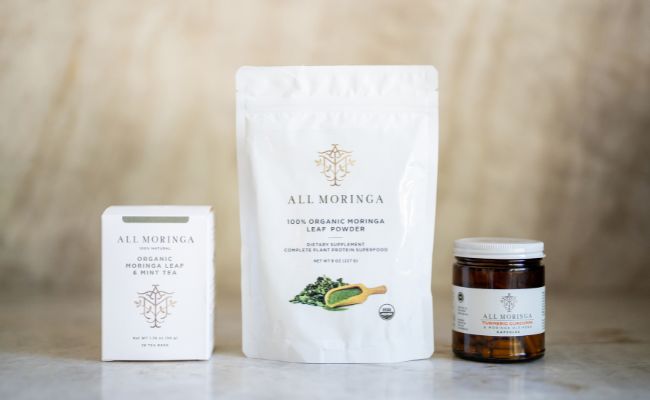
For a plant that does so much, it does not need to do everything. If you are ready to add real, whole-leaf moringa to your daily routine, our Moringa Leaf Powder is one ingredient, nothing added, and exactly what the research studied.
With care, Tzvi & the All Moringa Family
These statements have not been evaluated by the FDA. This product is not intended to diagnose, treat, cure, or prevent any disease. The information in this article is for educational purposes only and is not a substitute for professional medical advice. Always consult your healthcare provider before starting any new supplement routine.


*This statement has not been evaluated by the Food and Drug Administration. This product is not intended to diagnose, treat, cure, or prevent any disease.
Leave a comment
This site is protected by hCaptcha and the hCaptcha Privacy Policy and Terms of Service apply.