

Moringa Antioxidants Explained: The Compounds That Make This Plant Remarkable
Moringa Antioxidants Explained:
The Compounds That Make
This Plant Remarkable
If you have heard that moringa is packed with antioxidants, you heard right. Moringa leaves contain quercetin, kaempferol, chlorogenic acid, and other polyphenols and flavonoids that help protect cells from oxidative stress. But the story goes deeper than that. Moringa also contains isothiocyanates, compounds that laboratory research suggests may help activate the body's own protective systems through pathways like Nrf2 (Cheng et al., 2019, AAPS Journal). And moringa seed oil brings a completely different profile, rich in oleic acid and vitamin E.
That layered combination, not any single compound, is what makes moringa remarkable. Some of its compounds neutralize free radicals directly. Others may help the body raise its own defenses. This article breaks down how those compounds work, what the research actually says (as of early 2026), and why the leaf and the seed oil offer different strengths.
What Are Antioxidants?
What Are Direct and Indirect Antioxidants?
Direct antioxidants step in and neutralize free radicals themselves. In moringa leaves, these include polyphenols and flavonoids: quercetin, kaempferol, myricetin, chlorogenic acid, caffeic acid, rutin, and related phenolics (Leone et al., 2015, International Journal of Molecular Sciences).
Indirect antioxidants work differently. Instead of doing all the cleanup themselves, they help the body turn on its own defense systems. In moringa, the compounds that do this are isothiocyanates, formed from glucosinolates. Laboratory research has shown that moringa isothiocyanates can activate protective pathways linked to the body's own antioxidant response, particularly the Nrf2 pathway (Cheng et al., 2019, AAPS Journal).
That distinction matters. Moringa is not just handing the body ready-made shields. Some of its compounds may help teach the body to raise its own.
What Compounds Give Moringa Its Antioxidant Power?
Quercetin Lab Evidence
Kaempferol Lab Evidence
Chlorogenic Acid and Other Phenolics Lab Evidence
Isothiocyanates and Glucosinolates Lab Evidence
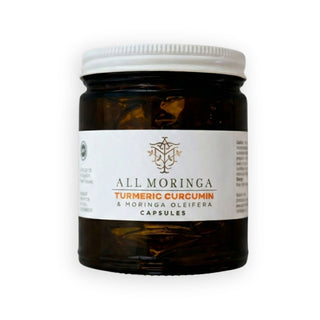
For athletes, or anyone who already takes turmeric, pairing moringa's isothiocyanate profile with turmeric makes nutritional sense. All Moringa's Turmeric and Moringa Capsules combine both in one daily serving, with black pepper added to support curcumin absorption.
What Is the Nrf2 Pathway, and Why Does It Matter for Moringa?
The Rutgers University Cell Study Lab / Cell Study
Important context: This is cell study evidence, not human clinical evidence. It tells us something promising about how moringa isothiocyanates behave at a cellular level, but confirming these effects in people requires human research.
The finding is still significant. It suggests that moringa is not only delivering antioxidant compounds to the body. Some of its compounds may also help the body strengthen its own internal protection. That is a different kind of support from simply taking an antioxidant supplement.
This is one reason whole moringa leaf powder preserves its value. Extracts isolate one or two compounds. Whole moringa leaf powder keeps the full network of isothiocyanates, polyphenols, and flavonoids working together as the plant evolved them.
What About Zeatin?
In agricultural literature, moringa leaf extract has been studied as a natural plant biostimulant, and zeatin is often cited as one of the active growth-promoting components (PMC review of moringa leaf extract as biostimulant). But here is where honesty matters.
A horticultural study published in HortTechnology (Basra and Lovatt, 2016) measured cytokinin levels in moringa leaves across multiple sampling dates. The researchers found that free cytokinin bases such as zeatin were either not detected or were present at very low levels, under 2 ng per gram dry weight. The predominant cytokinins were ribosylated forms, not free zeatin bases. That finding matters because the "moringa contains extraordinary zeatin concentrations" claim circulates widely online, but the evidence is less consistent than often suggested.
Zeatin is an interesting part of the moringa story, not the main reason to take it. The polyphenols, flavonoids, and isothiocyanates are the sturdier pillars.
Leaves, Seeds, and Seed Oil: Same Tree, Different Compounds
Moringa Leaves: the Broad-Spectrum Story
The leaves are the part most associated with a wide range of nutrients and phytochemicals. This is where you find the full antioxidant network: polyphenols, flavonoids (quercetin, kaempferol), carotenoids, chlorogenic acid, isothiocyanates, plus vitamins, minerals, all nine essential amino acids, and fiber (Leone et al., 2015, International Journal of Molecular Sciences). Researchers have identified over 100 bioactive compounds across different parts of the moringa plant (PMC comprehensive review, 2023).
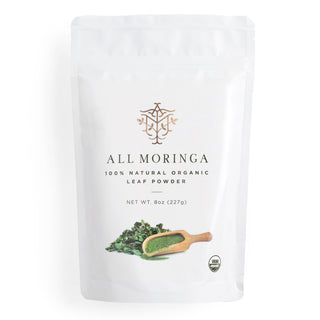
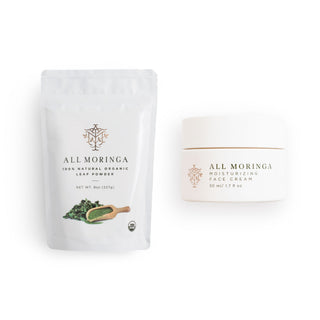
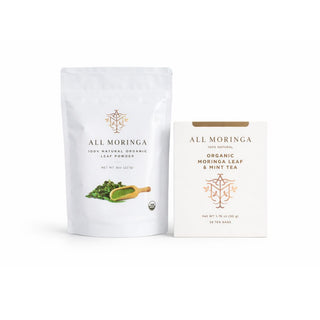
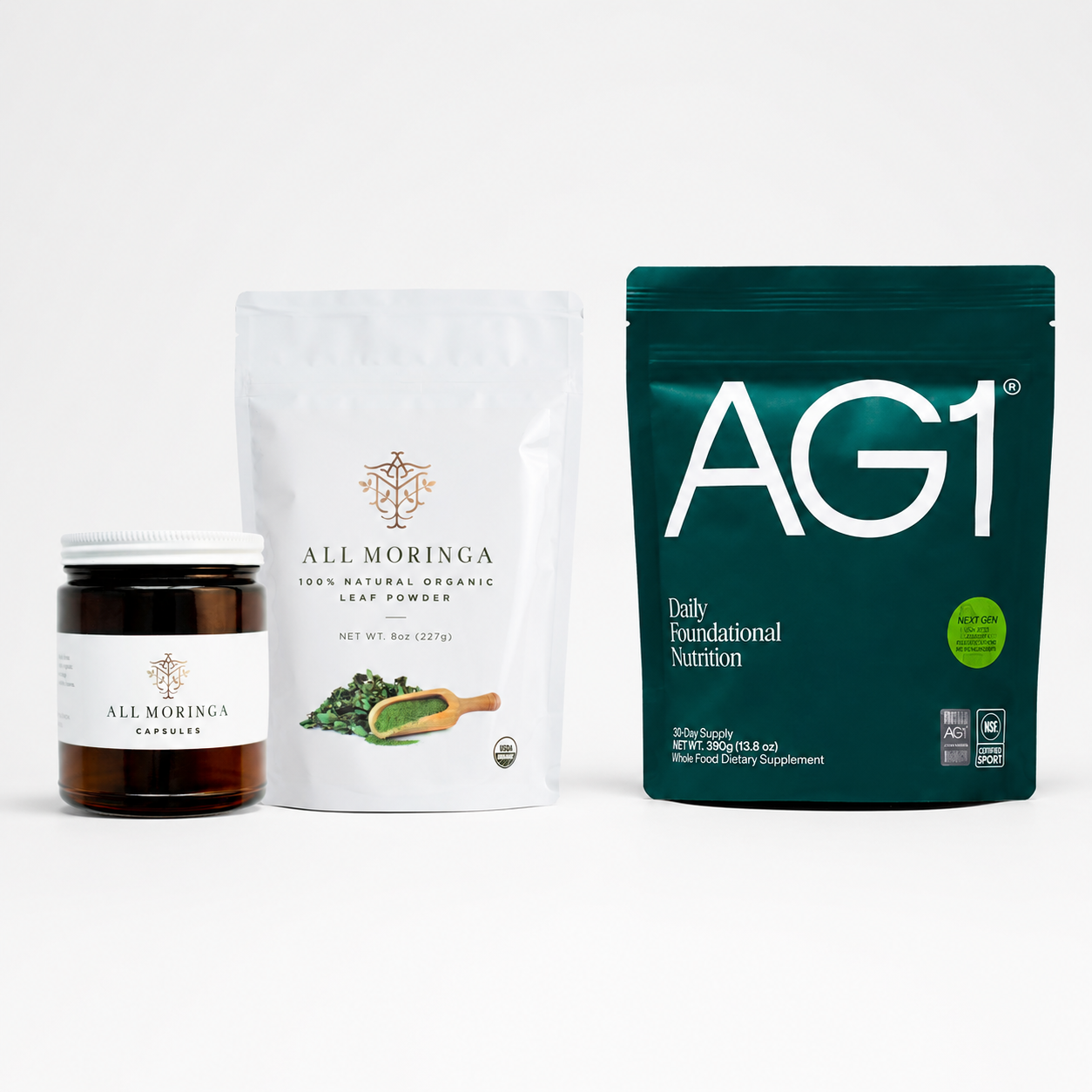
If you want whole-leaf nutrition daily, All Moringa's pure Moringa Leaf Powder is exactly that: the whole leaf, dried and ground, with nothing removed and nothing isolated.
Moringa Seeds: Their Own Chemistry
The seeds contain protein, oil, and bioactive compounds including moringa isothiocyanates such as MIC-1, along with glucosinolate-related compounds like niazimicin (PMC bioactive compounds review). The seeds are not just raw material for oil. They have their own active chemistry, and researchers have studied them separately from the leaf.
Moringa Seed Oil: a Different Kind of Strength
Once oil is pressed from the seeds, the profile shifts. Moringa seed oil is best known for its high oleic acid content (typically 67% to 78% of its fatty acid composition), along with tocopherols (vitamin E) and plant sterols (Leone et al., 2016, International Journal of Molecular Sciences).
Oleic acid is the predominant fatty acid in human sebum and a recognized component of the skin's natural lipid barrier, as described in the International Journal of Cosmetic Science. Tocopherols (vitamin E) are classified as skin-conditioning antioxidants in the International Cosmetic Ingredient Dictionary. Plant sterols are recognized as supportive of the skin barrier in cosmetic science literature.
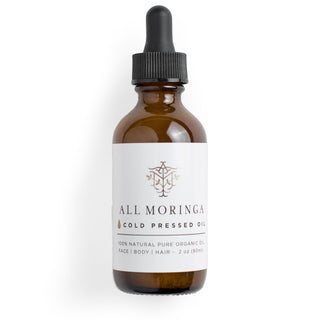
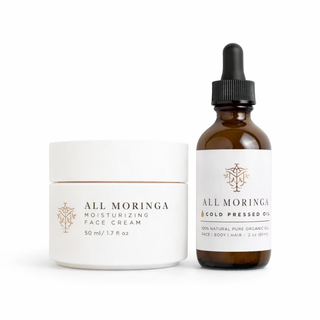
If you want the oleic acid and vitamin E profile of the seed in its purest form, All Moringa's cold-pressed Moringa Seed Oil is exactly that. For both leaf compounds and seed oil together, the Moringa Leaf and Seed Synergy Oil combines leaf extract with seed oil for whole-plant topical nourishment.
| Plant Part | Compound Strength | Best For |
|---|---|---|
| Moringa leaves | Polyphenols, flavonoids, isothiocyanates, amino acids, vitamins, minerals | Internal nutrition, antioxidant support, whole-food supplementation |
| Moringa seeds | Bioactive isothiocyanates (MIC-1), glucosinolates | Source material for oil; their own active chemistry |
| Moringa seed oil | Oleic acid (70%+), tocopherols (vitamin E), plant sterols | Skin nourishment, barrier support, topical moisturizing |
Why Compounds Working Together Matters
People often want one hero ingredient. One compound everyone can point to and say, "That one. That is the whole secret." But real plants are usually more interesting than that.
Moringa's strength appears to come from the fact that it offers a network of nutrients and phytochemicals working alongside each other. Some compounds offer direct antioxidant action. Some may support the body's own enzyme pathways. Some contribute healthy fats. Some provide minerals, amino acids, and fiber as part of a whole-food matrix.
This is one reason many people are drawn to whole-plant foods in the first place. You are not getting one isolated headline ingredient. You are getting a fuller package.
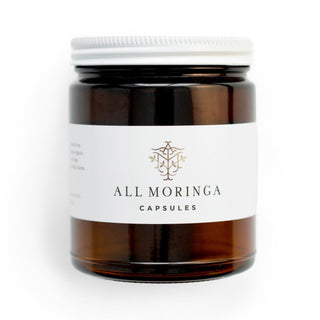
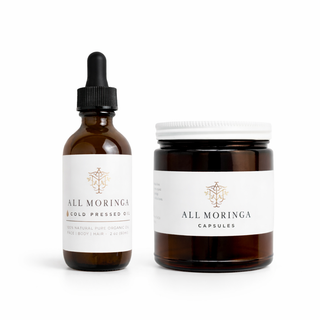
At All Moringa, that philosophy is built into every product. Our Moringa Leaf Powder is the whole leaf, dried and ground. Nothing extracted, nothing isolated, nothing diluted. One complete plant in the form your body recognizes as food. If you prefer convenience, Moringa Capsules deliver the same whole-leaf nutrition in a daily format.
Frequently Asked Questions
The Bottom Line
Moringa's antioxidant story is not about one single compound. It is about a network: direct antioxidants like quercetin and kaempferol that neutralize free radicals, indirect antioxidants like isothiocyanates that may help activate the body's own Nrf2 defenses, and a seed oil profile rich in oleic acid and vitamin E that serves the skin through a completely different mechanism.
The research is honest about what each tier of evidence means. Some findings are from human trials. Most are from laboratory and cell studies. The Nrf2 findings are promising but preclinical. The zeatin claims are weaker than the marketing suggests. What remains after that honest accounting is still genuinely remarkable: a whole plant with multiple layers of protective chemistry, studied by serious researchers at institutions like Rutgers and Johns Hopkins.
All Moringa exists to give you access to that whole plant, in the form your body recognizes as food. The leaf, as it grows. Nothing more, nothing less.
One Tree. A Full Spectrum of Care.
Whole-leaf nutrition from All Moringa. Pure Moringa Leaf Powder, Capsules, and cold-pressed Seed Oil. Nothing isolated. Nothing added.
With care,
Tzvi and the All Moringa Family

*This statement has not been evaluated by the Food and Drug Administration. This product is not intended to diagnose, treat, cure, or prevent any disease.
Leave a comment
This site is protected by hCaptcha and the hCaptcha Privacy Policy and Terms of Service apply.