

Moringa Seeds Filter Microplastics: What the Study Found
Science & the Miracle Tree
The Seed That Cleans Water
There are nearly 400,000 published studies on the Moringa oleifera tree. And just when you think you understand what this plant is capable of, it surprises you again.
In April 2026, researchers published findings in ACS Omega, a journal of the American Chemical Society, showing that a simple saline extract of Moringa seeds can remove more than 98% of PVC microplastics from drinking water. The extract performed comparably to aluminum sulfate, one of the most widely used chemical coagulants in water treatment plants globally. In more alkaline water, the moringa seed extract actually outperformed the chemical alternative.
This is not a fringe study. It is peer-reviewed science from the Institute of Science and Technology of São Paulo State University (ICT-UNESP) in Brazil, with researchers from both Brazil and the United Kingdom contributing to the work. And it is one more piece of evidence that moringa water purification — in its broadest sense — has far more to offer than the world has yet recognized.

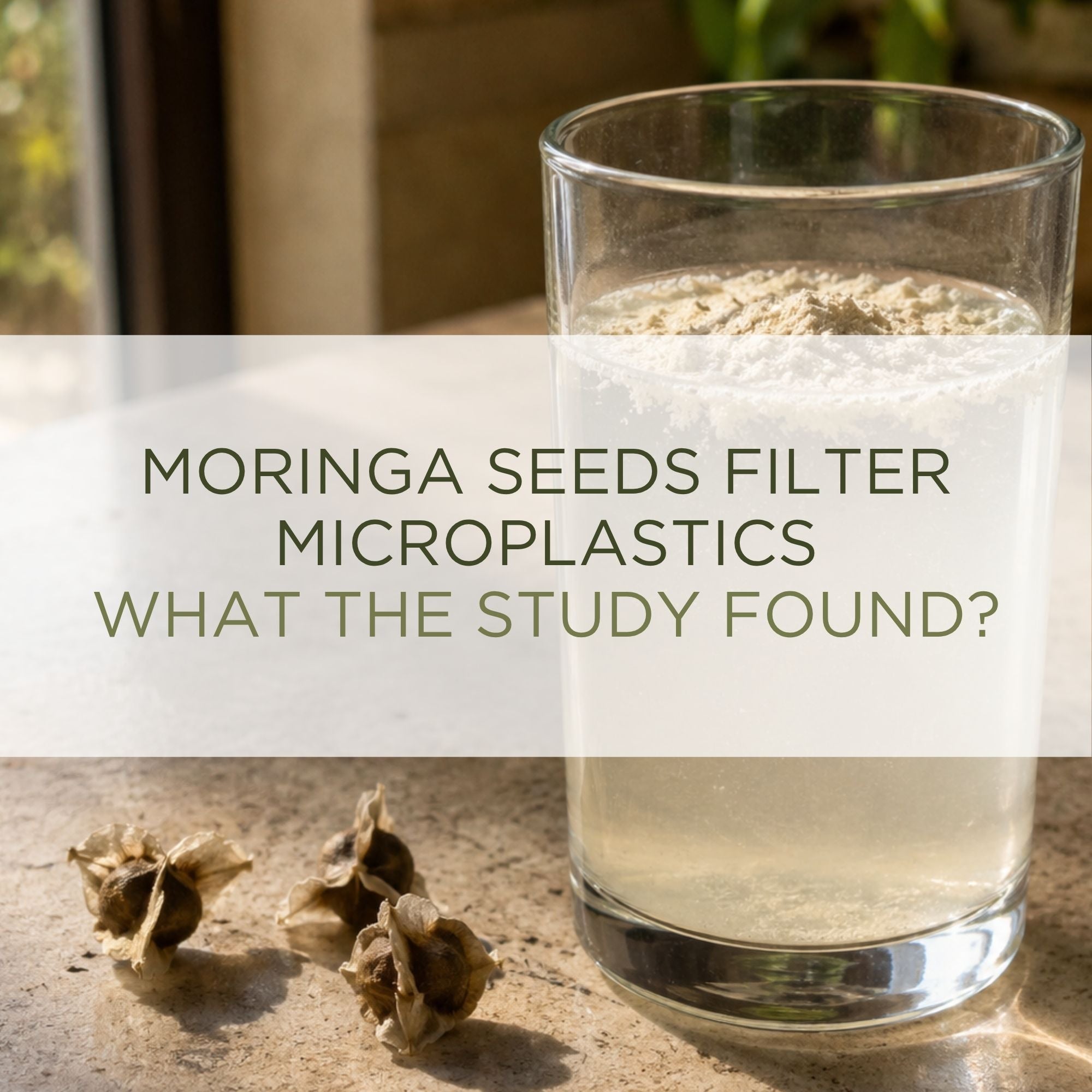
Moringa oleifera seeds — the same seed used in the 2026 ACS Omega water purification study
What Did Scientists Find About Moringa Seeds and Microplastics?
The study, led by Professor Adriano Gonçalves dos Reis and conducted by Gabrielle S. Batista during her master's degree research, was published in ACS Omega (2026; 11 (4): 6602). The researchers specifically evaluated moringa seed extract as a plant-based water filtration alternative to conventional chemical coagulants. The team tested both direct filtration and in-line filtration systems, and both approaches demonstrated comparable microplastic removal rates.
The optimal treatment conditions involved 30 mg/L of moringa seed saline extract combined with 9 mg/L of alum at a pH of 6.0, achieving 98.5% removal of aged PVC microplastics. The alum-only treatment removed 98.7% under the same conditions, making the two approaches essentially equivalent.
— Gabrielle S. Batista, lead researcher, ICT-UNESP. Cited in ScienceDaily, April 2026.
How Do Moringa Seeds Remove Microplastics From Water?
This process is called coagulation followed by flocculation. It is the same basic process that conventional water treatment uses, but moringa accomplishes it with a naturally occurring seed protein rather than a mined chemical compound.
The saline extract used in the study is made by crushing moringa seeds into a powder and dispersing that powder in a salt solution. Earlier work by the same research group demonstrated that moringa seeds are effective through a complete treatment cycle that includes coagulation, flocculation, sedimentation, and filtration. Independent studies across Africa and South Asia have confirmed the same mechanism: a 2015 Nigerian laboratory study found moringa seed protein extract achieved 96.67% turbidity reduction in raw river water, with progressive decreases in coliform bacteria as seed concentration increased.
The elegance of this mechanism is that moringa is doing something human engineers designed chemical plants to do, and it has been doing it naturally for as long as the tree has existed. The practice of moringa seeds water purification has deep roots across Africa and South Asia, where communities have used the seeds for traditional water clarification for generations. A technical brief by Germany's development agency (GATE/GTZ) documents this history — including how Dr. Samia Al Azharia Jahn's laboratory work in Sudan first confirmed moringa seeds could clarify turbid Nile River water, and how a single mature moringa tree's annual harvest can treat up to 30,000 liters of water. What the 2026 study adds is rigorous, peer-reviewed confirmation that this traditional knowledge holds up under controlled laboratory conditions specifically for microplastic removal. A 2024 study in the Journal of Emerging Investigators (Nadella & Nadella) demonstrated that moringa seed powder combined with coconut shell-activated carbon removed 100% of lead, copper, ammonium nitrate, and E. coli from polluted river water — extending moringa's purification reach well beyond microplastics.
How Does Moringa Seed Extract Compare to Aluminum Sulfate?
| Moringa Seed Extract | Aluminum Sulfate | |
|---|---|---|
| Microplastic removal (lab) | 98.5% (aged PVC) | 98.7% (aged PVC) |
| Performance in alkaline water | Better than alum | Standard performance |
| Biodegradable | Yes | No |
| Residual toxicity | Low (organic matter increase noted) | Aluminum residue concerns |
| Source | Renewable plant | Mined mineral |
| Regulatory concern | Minimal | Growing scrutiny |
| Sludge production | Lower | Higher |
— Professor Adriano Gonçalves dos Reis, ICT-UNESP. Cited in ScienceDaily, April 2026.
The one limitation noted for moringa seed extract is that it can increase dissolved organic matter in the treated water, which may require an additional removal step. At small scale, this trade-off is manageable. At large urban scale, it adds cost. Researchers continue to investigate optimization approaches.
What Types of Microplastics Did the Study Test?
To make the test more realistic, the research team exposed the PVC microplastics to ultraviolet radiation before testing. UV aging simulates the degradation that plastic undergoes after years of exposure to sunlight and weather in the environment. Aged microplastics behave differently from fresh particles, so testing aged material brings the lab results closer to real-world conditions.
Microplastics are defined as plastic particles smaller than 5 millimeters. They enter drinking water through a variety of pathways, including the breakdown of larger plastic waste, synthetic textile washing, packaging degradation, and atmospheric deposition. Studies have detected microplastics in tap water, bottled water, and municipal water supplies globally. Their long-term effects on human health are still being studied, but the presence of particles with known mutagenic potential in drinking water is a legitimate area of scientific concern.
Can You Use Moringa Seeds to Filter Water at Home?
Step One: Find the White Kernel
Look at a moringa seed and you will notice it looks different from most seeds you have seen. It comes out of the pod with a papery outer shell — three little wings fanning out from the center, a bit like a small tan propeller or star. That outer shell is just packaging. It is not what you need.
Crack it open — gently, with your fingers or a small tap — and peel it away. Inside, you will find a round, cream-white kernel about the size of a small pea. Smooth. Soft. Pale. That little white kernel is everything. It is the same kernel we cold-press to make our Moringa Seed Oil. And it is the part the 2026 study used to remove 98% of microplastics from water. Discard the wings and outer shell. Use only the white kernel inside.

Why It Works: The World's Simplest Explanation
Here is the beautiful part — and you do not need a chemistry degree to understand it.
The tiny particles in dirty water — microplastics, dirt, sediment, bacteria — all carry a small negative electrical charge. Because they all have the same charge, they push each other away, like two magnets facing the same direction. They stay suspended, spread out, invisible. That is why you cannot just filter them with a cloth. They are too small and they repel each other.
The white moringa kernel contains natural proteins that carry a positive charge. When you crush that kernel into powder and mix it into the water, those proteins are drawn toward the negatively charged particles. They wrap around them, neutralize their charge, and cause them to stick together. Tiny invisible particles become visible clumps. Those clumps get heavy and sink to the bottom. The water above them clears.
That is it. That is the whole mechanism. A seed doing in minutes what a water treatment plant uses chemicals to do.
How to Try It: 5 Simple Steps
This is the basic method that communities have used for water clarification for generations. ECHO Community's video on moringa-coated sand filters shows what this looks like in practice at the village scale. It is not the exact laboratory procedure from the 2026 study — that required precision equipment — but it follows the same principle and uses the same biology.
- Crack open the seed and remove the outer shell. You want only the white kernel inside. The papery wings and husk get thrown away — they do nothing for the water.
- Grind the white kernel into a fine powder. Use a mortar and pestle, a spice grinder, or even a clean smooth stone. The finer the powder, the better it works. You are trying to break the kernel apart so those proteins can release into the water.
- Mix the powder with a small amount of clean water to make a paste, then stir it into the water you want to treat. One kernel is enough for roughly 10 liters of water. Add the paste and stir the water quickly and consistently for about 5 minutes. You are activating the process — giving the proteins a chance to find and bind to the particles in the water.
- Leave it alone for 1 to 2 hours. Walk away. Let the water rest undisturbed. You will begin to see particles gathering and sinking. The water above will slowly clear.
- Carefully pour off the clear water from the top — and then boil it. Leave the cloudy sediment at the bottom behind. The moringa has pulled the particles out of the water, but it has not killed bacteria. You must boil the water before drinking. This is not a step you can skip.
What the research does confirm is that moringa seeds water purification works as a mechanism — and a remarkably effective one. The researchers are now testing the method on real river water supplying entire cities in Brazil, to see how it performs with the full complexity of natural water conditions. The results so far suggest the Miracle Tree has a bigger role to play in clean water access than the world has yet imagined.
Why Is Moringa Water Purification Better Than Chemical Alternatives?
The environmental case matters beyond just the water itself. Aluminum sulfate production requires bauxite mining, which has significant land and ecological impacts. Aluminum residues in treated water and in treatment plant sludge have raised growing regulatory concern in multiple countries. Moringa water purification sidesteps all of this: the coagulant can be grown, harvested, and applied locally, with no synthetic chemistry involved — a meaningful shift in how communities can approach water treatment sustainably. A 2015 comparative study in Environmental Monitoring and Assessment tested moringa and alum head-to-head on natural and polluted water in Colombia: moringa achieved 95% color removal versus alum's 80.3%, and both achieved 100% removal of color and turbidity from polluted water — confirming moringa can match or outperform chemical alternatives depending on water conditions.
What Does This Discovery Tell Us About the Intelligence of One Tree?
At All Moringa, we have spent years working closely with Moringa oleifera. We press the seed into oil. We dry and grind the leaf into powder. We steep the leaves into tea. We have built an entire brand around the conviction that this one tree contains more nutritional and biological intelligence than most people realize.
So when a peer-reviewed study confirms that the same seed we cold-press for skincare oil can also neutralize the electrical charge of toxic microplastics in water, our reaction is not surprise. It is recognition.
The seed of Moringa oleifera contains proteins that behave as natural coagulants. Those same seeds, when cold-pressed, yield an oil rich in oleic acid, behenic acid, vitamin E, and phytosterols. These are different applications of the same seed's biological intelligence. The proteins purify. The lipids nourish. One seed, serving both purposes, as nature designed.

The same tree whose leaf gives the body vitamins A, C, and E, all nine essential amino acids, calcium, potassium, and iron (USDA FoodData Central) is now being studied as a solution to one of the most urgent water contamination problems of our time. One tree. One plant. An extraordinary range of expression.
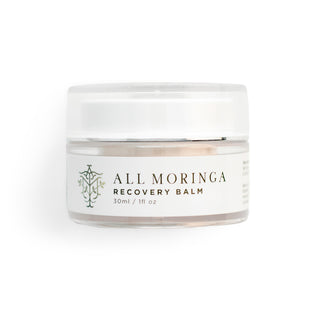
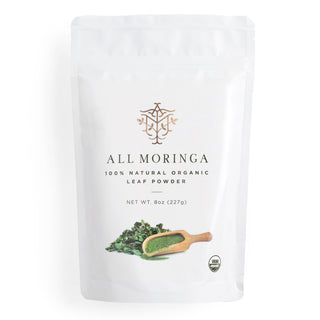
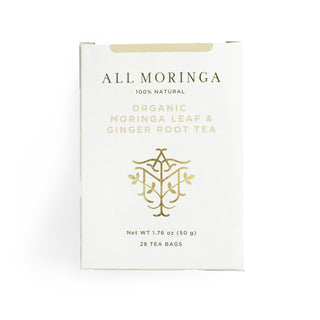
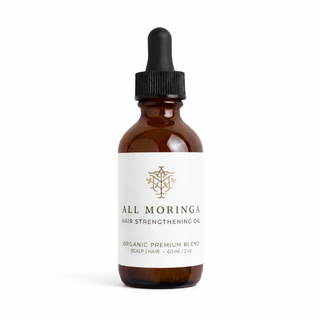
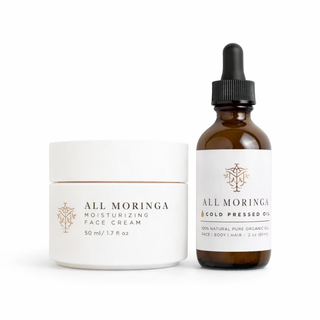
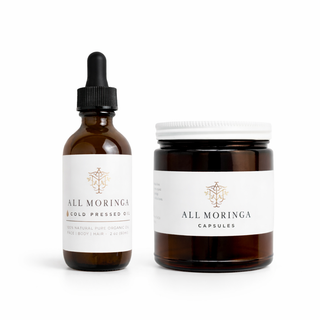
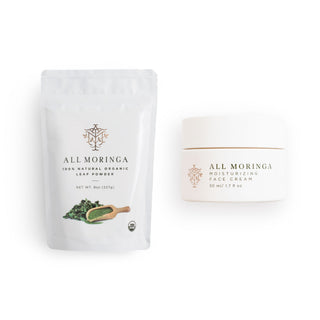
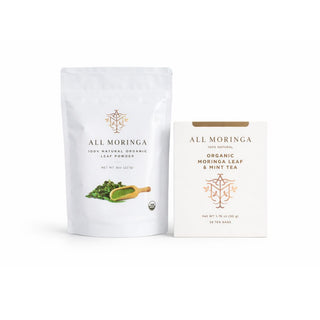
If you want to experience what the Moringa seed produces for your skin, our Pure Moringa Seed Oil is a place to start. And if you want to nourish your body with what the Moringa leaf carries inside it, our whole-leaf Moringa Leaf Powder brings the full-spectrum nutrition of the tree to your daily routine. Because the most remarkable thing about this tree is that it keeps giving, leaf to seed, inside and out.
Frequently Asked Questions
The Miracle Tree Keeps Revealing Itself
The 2026 study out of São Paulo State University is one more chapter in the long story of what Moringa oleifera is capable of. For centuries, communities across tropical regions have used moringa for food, medicine, and water clarification. For years, researchers have been confirming, compound by compound, why it works. Now moringa seeds water purification has entered the scientific record — with 98.5% microplastic removal to back it up.
At All Moringa, we have always believed that the closer you look at this tree, the more you find. That is why we use whole plants, not extracts. It is why we press the seed and powder the leaf. And it is why we share research like this with the people who trust us.
The leaf nourishes. The seed restores. And apparently, the seed also cleans your water. One tree. Wholeness from one source.
Experience the Miracle Tree
Explore what the Moringa seed produces for your skin and what the Moringa leaf carries for your body.
Sources & Further Reading
- Batista, G.S. et al. (2026). Moringa oleifera seed saline extract as a natural coagulant for microplastic removal. ACS Omega, 11(4), 6602. View study →
- Magaji, U.F. et al. (2015). Biocoagulation Activity of Moringa oleifera Seeds for Water Treatment. The International Journal of Engineering and Science, 4(2), 19-26. View study →
- Salazar Gamez, L.L. et al. (2015). Comparative study between M. oleifera and aluminum sulfate for water treatment: case study Colombia. Environmental Monitoring and Assessment, 187(10), 668. View on PubMed →
- Nadella, S. & Nadella, L. (2024). Heavy metal and bacterial water filtration using Moringa oleifera and coconut shell-activated carbon. Journal of Emerging Investigators. View study →
- GATE - Deutsche Gesellschaft fur Technische Zusammenarbeit. Water Clarification using Moringa oleifera. Technical Information Sheet W1e. View technical brief →
- ECHO Community. Moringa-coated sand filters as a sustainable solution for clean water. Watch video →

*This statement has not been evaluated by the Food and Drug Administration. This product is not intended to diagnose, treat, cure, or prevent any disease.
Leave a comment
This site is protected by hCaptcha and the hCaptcha Privacy Policy and Terms of Service apply.