

How We Feed Our Family While Living With Mold In Our Walls
A Family Story
A Year of Searching. One Word We Did Not Hear: Mold.
For a year, we watched our daughter struggle.
Extreme behaviors that came on suddenly, with no clear trigger. Severe eczema that broke out on her hands and would not heal. And then, like the situation needed another layer, her body started rejecting more and more foods. Sudden, severe allergies to things she had eaten her whole life. We ended up putting her on a strict low-histamine diet on top of everything else.
Doctor visit after doctor visit. Specialist after specialist. Medication after medication. Months of effort. More money than we want to count. Nothing held.
We did not know what we were dealing with. Eventually we found two words that explained the behavioral piece: PANS and PANDAS. Two related conditions that finally made sense of the abrupt changes in a way nothing else had. (The National Institute of Mental Health page on PANS and PANDAS is the authoritative entry point.)
But knowing the name was not the same as the healing. We learned the next part the harder way. A child with PANS or PANDAS cannot fully heal while they are still being exposed to whatever is triggering the immune system. And one of the most commonly overlooked triggers is mold.
So we tested the dust in our home with an ERMI / HERTSMI lab kit. The result came back. There was mold in our house.
We are addressing it, professionally and carefully, but like most families dealing with this, we are not moving out tomorrow. We are still cooking dinner here. We are still living here. So the question Maya and I could actually answer every single day was this: what do we feed her, on a low-histamine diet, with most of the "healthy" foods now off the table?
This is what we landed on. Not a $300 monthly supplement stack. Not a protocol from a clinic. Real food, within tight constraints, with one anchor ingredient at the center of it.
What mold does to your body, slowly
Mold exposure is not the kind of thing that makes you sick overnight. It is a slow draw. Your immune system is doing background work every single day to deal with what is in the air, and that work costs nutrition. The longer the exposure, the more your body spends.
According to the CDC mold and dampness page, prolonged indoor mold exposure can trigger inflammation, allergic responses, and immune strain even in otherwise healthy people. Children and anyone with weakened immunity feel it first. None of this is dramatic. It is just steady. And the steady cost is what you can do something about, while you work on fixing the source.
The five nutrients we started watching
When you read enough about chronic mold exposure, the same nutrients keep coming up. There are real reasons for each one, and they have nothing to do with what is in our pantry.
Mycotoxins damage cell membranes through oxidative stress, which burns through antioxidants like vitamin C and vitamin E. Mycotoxins also damage the gut lining, which compromises absorption of zinc and the immune cells that depend on it. They put pressure on the adrenals and kidneys, which depletes potassium. And the methylation pathways your body uses to process and clear toxins run on the B vitamins, especially B6, B9 (folate), and B12.
Those are the five we started watching. There are others (magnesium, selenium, glutathione precursors, omega-3s, vitamin D, vitamin A, and a real list more) and we worked those into our daily food and our daughter's clinician-guided supplement plan too. But these five are the ones that come up most consistently across the research and clinical writing on mold-driven immune support.
It was only after we had been reading about all this for months that we realized moringa leaf actually hits seven of the nutrients on our list in one ingredient: the original five (vitamin C, vitamin E, zinc, potassium, the B vitamins) plus vitamin A and magnesium. According to USDA FoodData Central and a 2015 review in Nutrients by Leone and colleagues, dried moringa leaf also carries meaningful amounts of calcium and iron, plus all nine essential amino acids. The two big nutrients moringa does not cover are vitamin D and vitamin B12. Those need a separate source, and we work with our daughter's clinician on that.
We were not looking for moringa-justifying nutrients. We were looking for what would actually help her body. The fact that moringa already lived in our pantry, and that one ingredient could carry that much of the load, made it a much easier daily anchor than building a stack of separate supplements. (Full nutrient-by-nutrient breakdown is in our Moringa Nutrient Spectrum article.)
There is one more thing about moringa that turned out to matter for us specifically. With our daughter's histamine reactivity, most nutrient-dense plants were off the table. Moringa is low histamine. And the part that still surprises us: early research published in an NIH-indexed journal suggests moringa extracts have shown anti-allergic activity in lab settings, likely because of the quercetin in the leaf, which is a natural mast cell stabilizer. For a kid on a strict low-histamine diet who still needs real nutrition, that combination is rare.
That is the whole reason we built All Moringa in the first place. And when our own family hit a wall, it is why moringa became the daily anchor. Not the only thing we do, but the simplest one.
A normal day in our kitchen
What follows is what works for us. Low histamine, simple, repeatable. Our daughter is on the strictest version of the diet; the rest of the family eats mostly the same way to keep the kitchen sane.
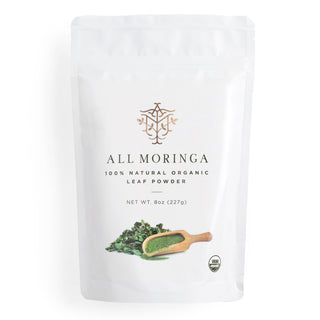
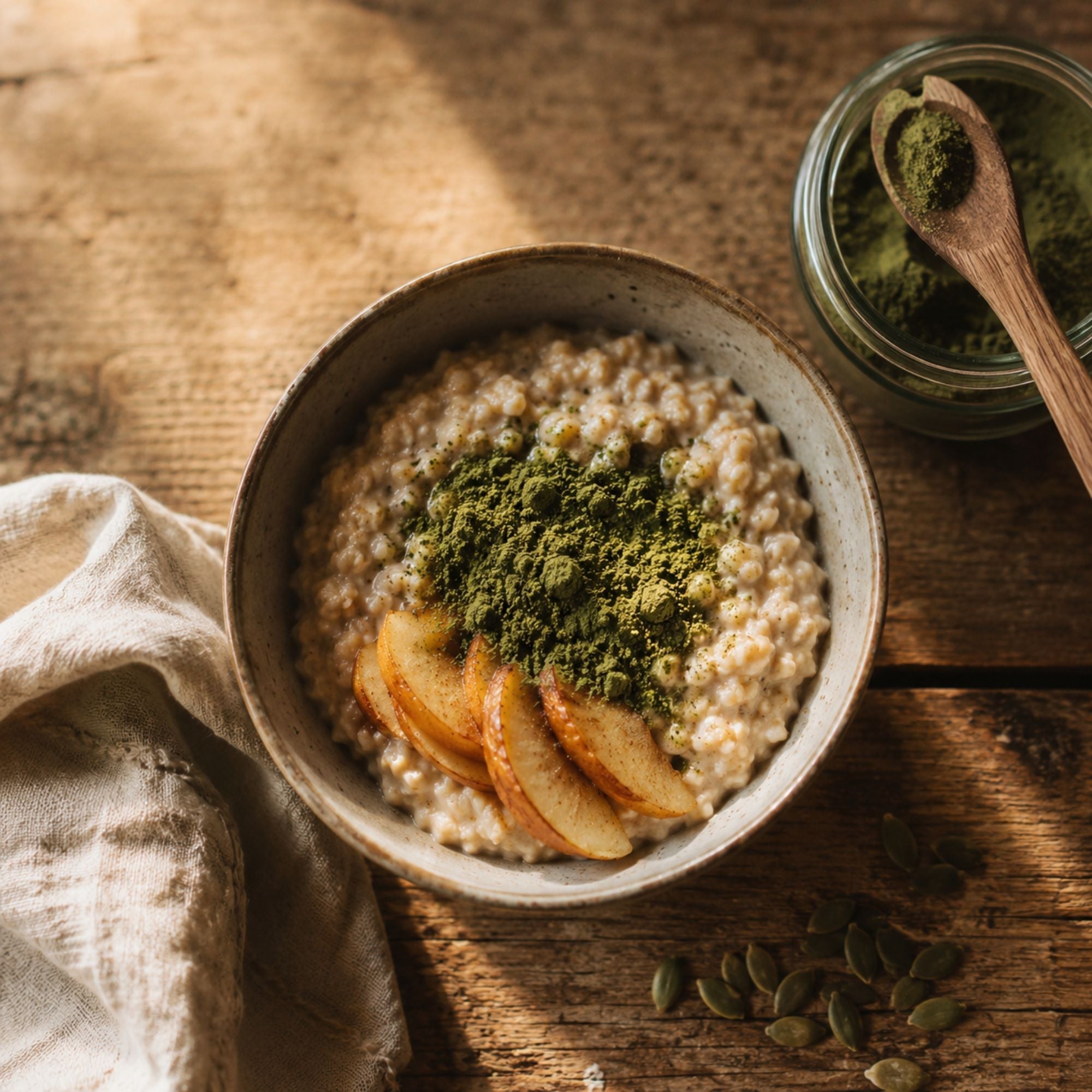
Morning. Oatmeal cooked in water or coconut milk. A teaspoon of our Moringa Leaf Powder stirred in. A handful of cooked apple slices on top. Sometimes hemp seeds or pumpkin seeds. (The green smoothie we used to make does not work for her anymore: banana, frozen berries, spinach, and avocado are all on the high-histamine list. Oatmeal with cooked apple and moringa is the replacement that has held up.)
Lunch. Fresh-cooked chicken or turkey, never reheated, never aged. Steamed broccoli, zucchini, cauliflower. A bit of olive oil and sea salt. Rice or quinoa underneath. (For more ways to pair moringa with other foods, our Perfect Nutrient Companions piece walks through what works in real meals.)
Snacks. Fresh apple slices. Pumpkin seeds. Cucumber sticks. Pear slices.
Dinner. Whatever was at the fish counter today, cooked the same day (older fish develops histamine fast). Sweet potato. A simple kale or lettuce salad with olive oil. No tomato. No vinegar.
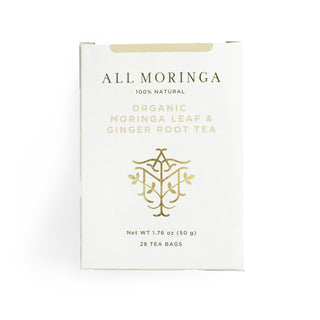
Tea. A cup of our Moringa and Ginger tea at the end of the day. Both moringa and ginger are low histamine and gentle. This is the one ritual that has stayed constant.
We also cut a long list of things, some of which we did not expect. Spinach. Avocado. Tomatoes. Citrus. Bananas. Almond butter. Strawberries. Anything fermented or aged. Anything left in the fridge overnight before being eaten. Plus the usual culprits in any mold-exposed home: peanuts, dried fruit, certain coffees, alcohol, refined sugar. The list is long. The list also taught us how much of the "healthy" food landscape is built on histamine-rich ingredients.
Why moringa, of all things
When you are trying to replenish a long list of nutrients at the same time, you have two choices. You can take a stack of isolated supplements, each one a single fragmented compound on its own. Or you can eat a whole plant that already carries most of them in the form your body actually recognizes.
We chose the plant.
We want to be straight with you about what moringa does and does not do, because we have read enough wellness blogs that play loose with this. Moringa will not remove mold from anyone's body. It will not fix your walls. What it does is help refill the nutrient account that the body keeps drawing from while it deals with something like ongoing mold exposure. That is the honest version. That is the only thing we will claim here.
How we use moringa seed oil on her eczema
On top of everything else, the eczema on our daughter's hands flared at the same time as all the rest. Doctor-prescribed creams either did nothing or made the patches worse. Most of the natural oils we tried (coconut, jojoba, even some products marketed specifically for eczema) either did nothing for her or burned her skin on contact.
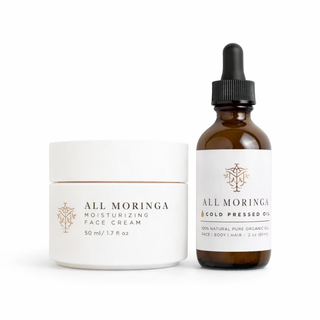
The one that did not burn, and actually helped, was our Pure Moringa Seed Oil. We apply a thin layer and massage it into her hands twice a day. The redness softens. The cracking calms. It absorbs without leaving her sticky or oily.
There is a reason this works that we did not know going in. Moringa seed oil is over 70% oleic acid, the same fatty acid your skin naturally makes. It also carries vitamin E and several plant compounds (quercetin, ferulic acid) that have a calming effect on inflammation in lab and dermatology research. It is one of the few oils gentle enough for already-irritated skin without adding anything else for the skin to fight off.
We cannot tell you it will work the same way for your child's eczema. Every kid's skin is different. We can tell you what worked for ours. And we can tell you to patch-test on a small area before any regular use, and to work with a dermatologist if the eczema is severe.
Frequently Asked Questions
A note from our family
If you are reading this because you are in the same situation, the first step is not panic. The first step is not a thousand-dollar protocol. The first step is the next meal.
Eat the leafy green. Skip the sugary snack. Drink the water. Take the moringa. Sleep eight hours if you can. And work toward fixing the source, in whatever way your real life makes possible.
Our daughter's story is not yet finished. Neither, probably, is yours. The work in the kitchen, every single day, is what we can give while we wait.
If you want a place to start
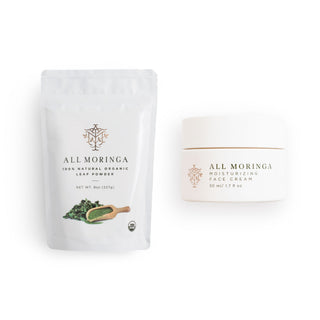
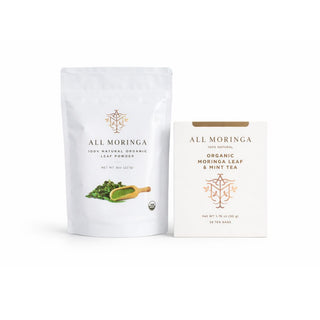
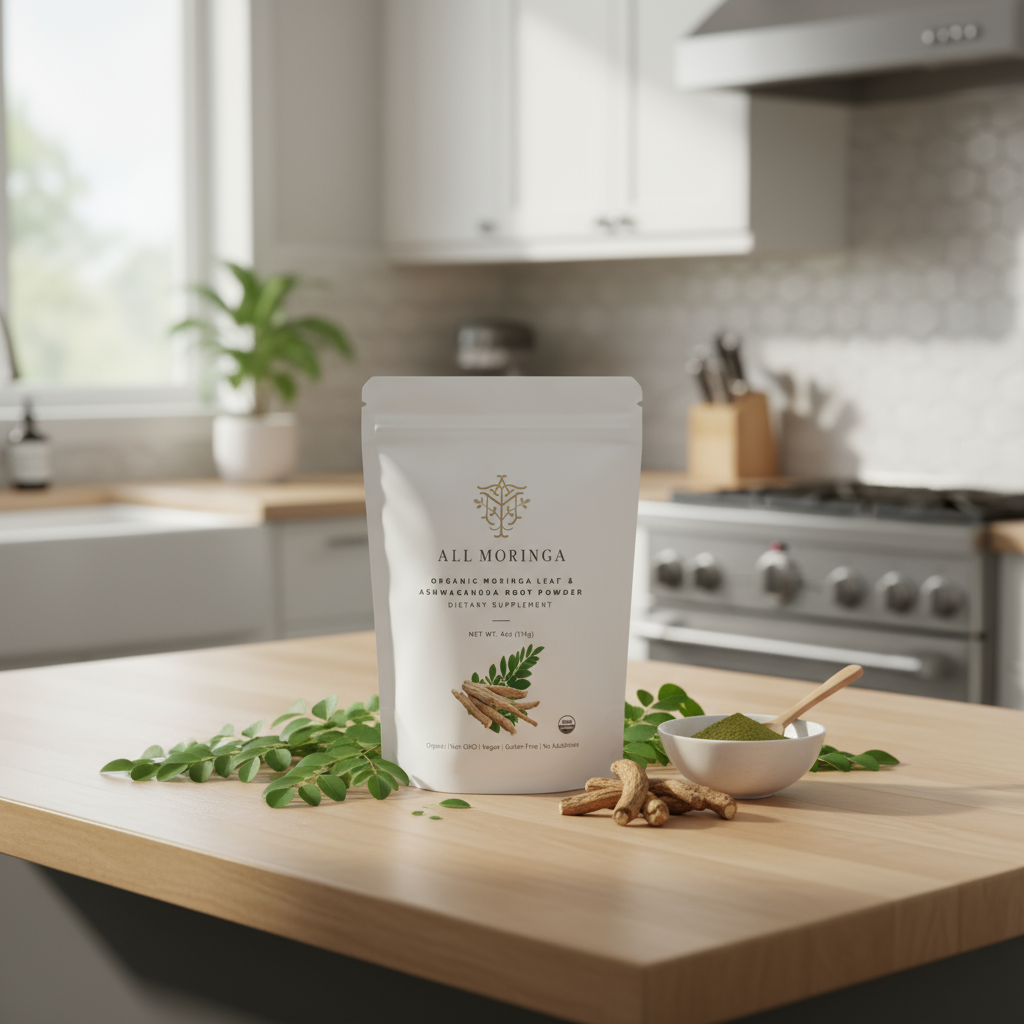
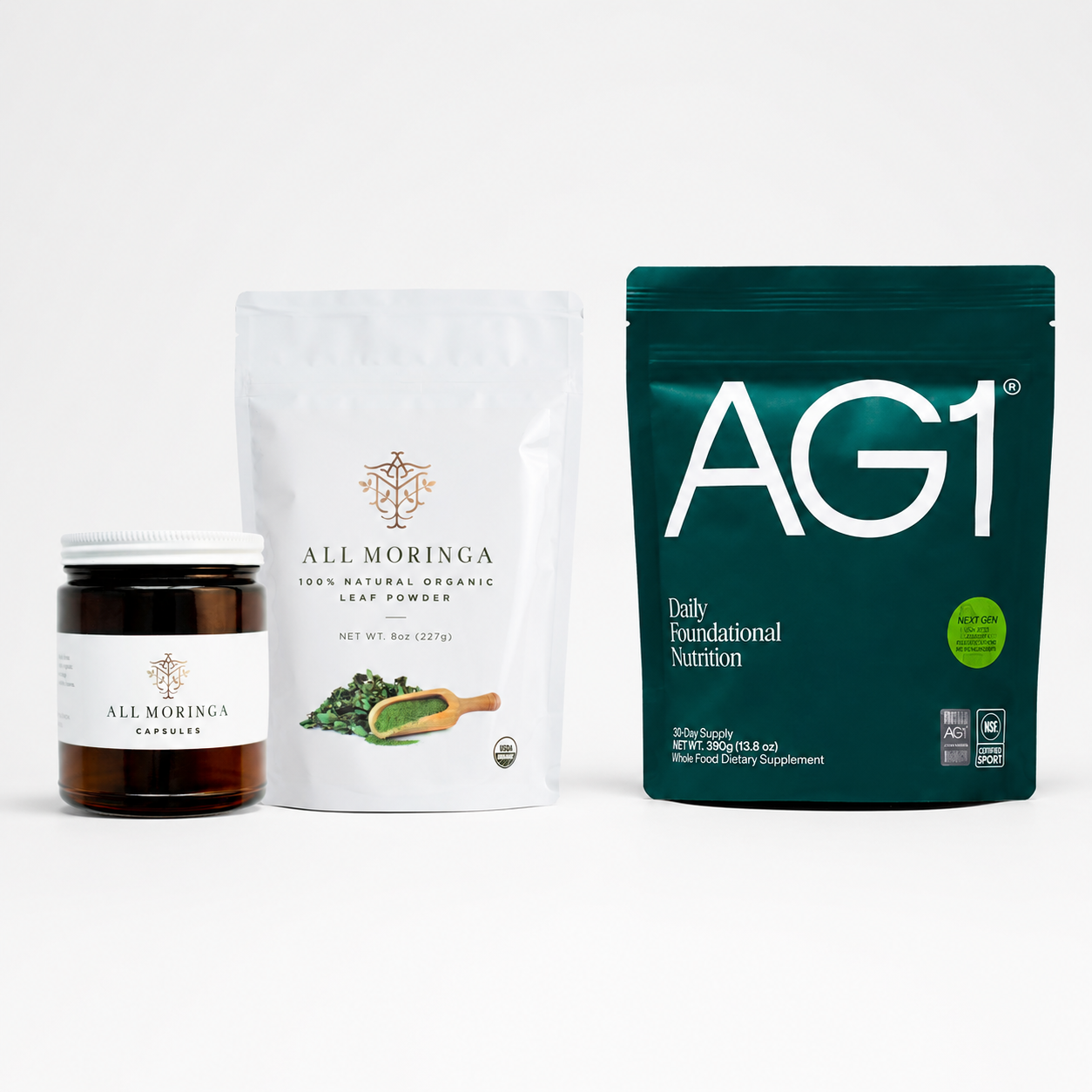
One ingredient. Whole plant. The way nature made it. Our Moringa Leaf Powder is what we put in our family's oatmeal every morning.
Shop Moringa Leaf PowderWith care,
Tzvi and Maya
The All Moringa Family

*This statement has not been evaluated by the Food and Drug Administration. This product is not intended to diagnose, treat, cure, or prevent any disease.
Leave a comment
This site is protected by hCaptcha and the hCaptcha Privacy Policy and Terms of Service apply.