

The Full Nutrient Spectrum of Moringa: Nature's Whole-Food Multivitamin

Why Customers Ask What Is Really in Moringa
Not long ago, a customer asked us something that many wonder:
“Does moringa really contain all these vitamins and minerals: A, B1, B2, B3, B6, B7, C, E, K, plus calcium, iron, magnesium, potassium, phosphorus, zinc, and selenium? And if so, how much?”
It’s a great question. Because when you look at moringa leaf powder, you’re not just holding a green superfood: you’re holding a whole-food source of vitamins, minerals, protein and antioxidants in one. Let’s break it down.
Moringa Nutritional Profile: Vitamins and Minerals
Vitamins in Moringa Powder
Per 100 g of dried moringa leaf powder, research shows (Leone et al., 2015):
-
Vitamin A (beta-carotene): 20–40 mg
-
Vitamin B1 (Thiamine): ~2–3 mg
-
Vitamin B2 (Riboflavin): ~21 mg
-
Vitamin B3 (Niacin): ~8 mg
-
Vitamin B6 and B7 (Biotin): present in supportive amounts
-
Vitamin C: ~15–18 mg (higher in fresh leaves, some is lost during drying)
-
Vitamin E: ~74–120 mg
-
Vitamin K: high amounts, important for bone and blood health
Minerals in Moringa Powder

According to a recent compositional study (Peñalver et al., 2022)
-
Calcium: ~1480 mg
-
Iron: ~25 mg
-
Potassium: ~1750 mg
-
Magnesium: ~300 mg
-
Phosphorus: ~350 mg
-
Zinc: ~2 mg
-
Selenium: ~270 µg on average, depending on soil conditions
These numbers explain why moringa is so often called a whole-food multivitamin: it naturally delivers a broad spectrum.
Protein, Amino Acids, and Fiber
-
Protein: ~25 g per 100 g. What makes moringa unique is that it’s a complete plant protein with all 9 essential amino acids. That’s rare in the plant world.
-
Fiber: ~12–20 g per 100 g, supporting digestion and satiety.
-
Together, this makes moringa powder more than just a vitamin source; it’s also a real food that nourishes.
Complete amino acid profile + flavonoids/phenolics (quercetin, kaempferol, etc.) (Starzyńska-Janiszewska et al., 2022, Foods)
Bioactive Compounds: Beyond Vitamins and Minerals
Antioxidants
Moringa leaf powder contains quercetin, kaempferol, lutein, beta-carotene, and chlorogenic acid. These protect against oxidative stress, the damage caused by free radicals.
Anti-inflammatory Compounds
Moringa has unique isothiocyanates (like glucomoringin derivatives) that have shown anti-inflammatory activity in lab and animal research.
Antibacterial & Antifungal
In lab studies, Moringa leaf extracts have shown activity against common bacteria and fungi.
Other Phytonutrients
You’ll also find tannins, saponins, and plant sterols like beta-sitosterol, each adding to moringa’s wellness profile.
Moringa Powder Nutrition Facts per Serving
For everyday use, here’s what moringa looks like in real portions:
-
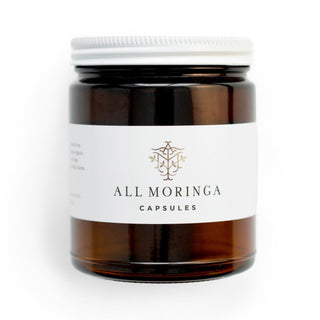
2 g (≈ 4 capsules or ½ tsp powder): 30 mg calcium, 0.5 mg iron, 35 mg potassium, 0.5 g protein
-
5 g (≈ 1 tsp powder): 74 mg calcium, 1.3 mg iron, 87 mg potassium, 1.25 g protein
-
10 g (≈ 2 tsp powder): 148 mg calcium, 2.5 mg iron, 175 mg potassium, 2.5 g protein
That’s why we like to say: Gram for gram, more calcium than milk and more iron than spinach, all from one leaf.

Moringa vs Supplements: A Whole-Food Advantage
Unlike isolated pills, moringa leaf powder offers:
-
Synergy: Nutrients + bioactives working together, not in isolation.
-
Recognition: Your body sees it as food, not as a synthetic compound.
-
Simplicity: Protein, vitamins, minerals, and antioxidants all in one spoon.
This makes moringa less of a “supplement” and more of a daily whole-food wellness ally.
How to Use Moringa Leaf Powder
-
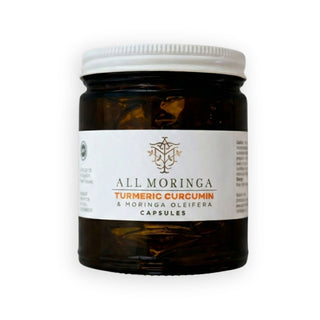
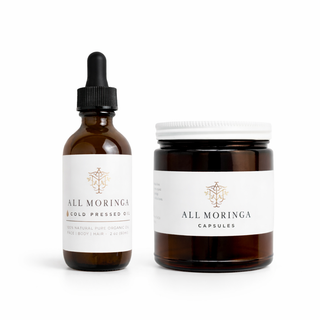
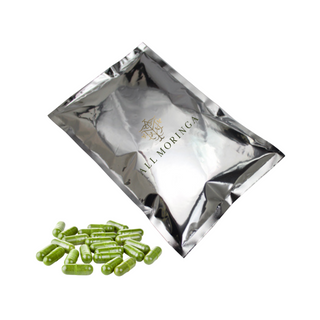
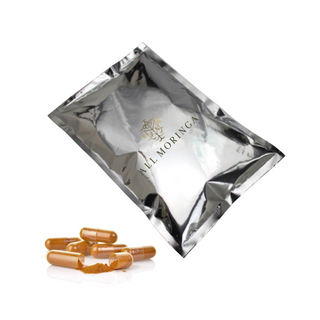
Capsules: Easy daily serving, no prep.
-
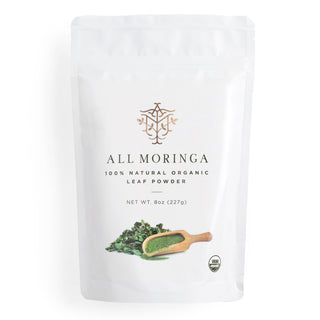
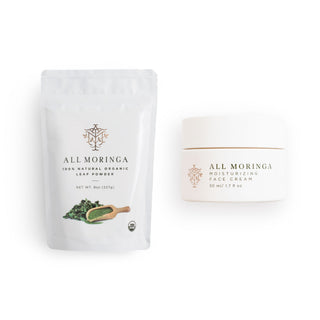
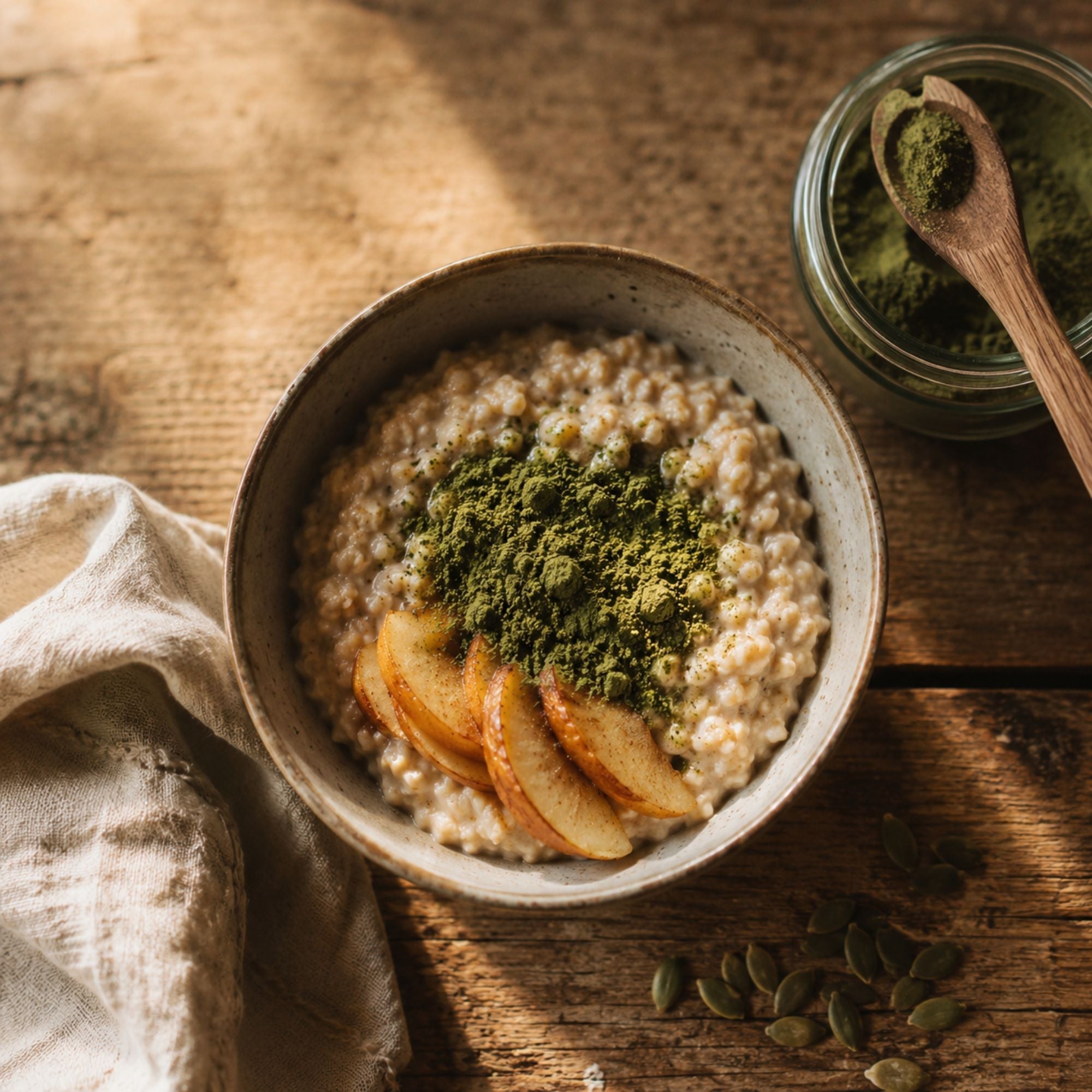
Powder: Stir into smoothies, teas, or soups.
-
DIY Skincare: Mix into a face mask with a few drops of moringa seed oil for topical benefits.
The Bottom Line: One Leaf, Many Nutrients
Moringa isn’t a quick fix. But it is one of nature’s most nutrient-dense plants, bringing together protein, vitamins, minerals, antioxidants, and bioactives the way a whole food does, not the way an isolated multivitamin does.
That’s why we love sharing it with our community, as food, as wellness, and as a way to nourish body and skin from the inside out.
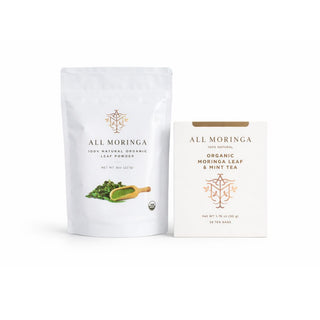
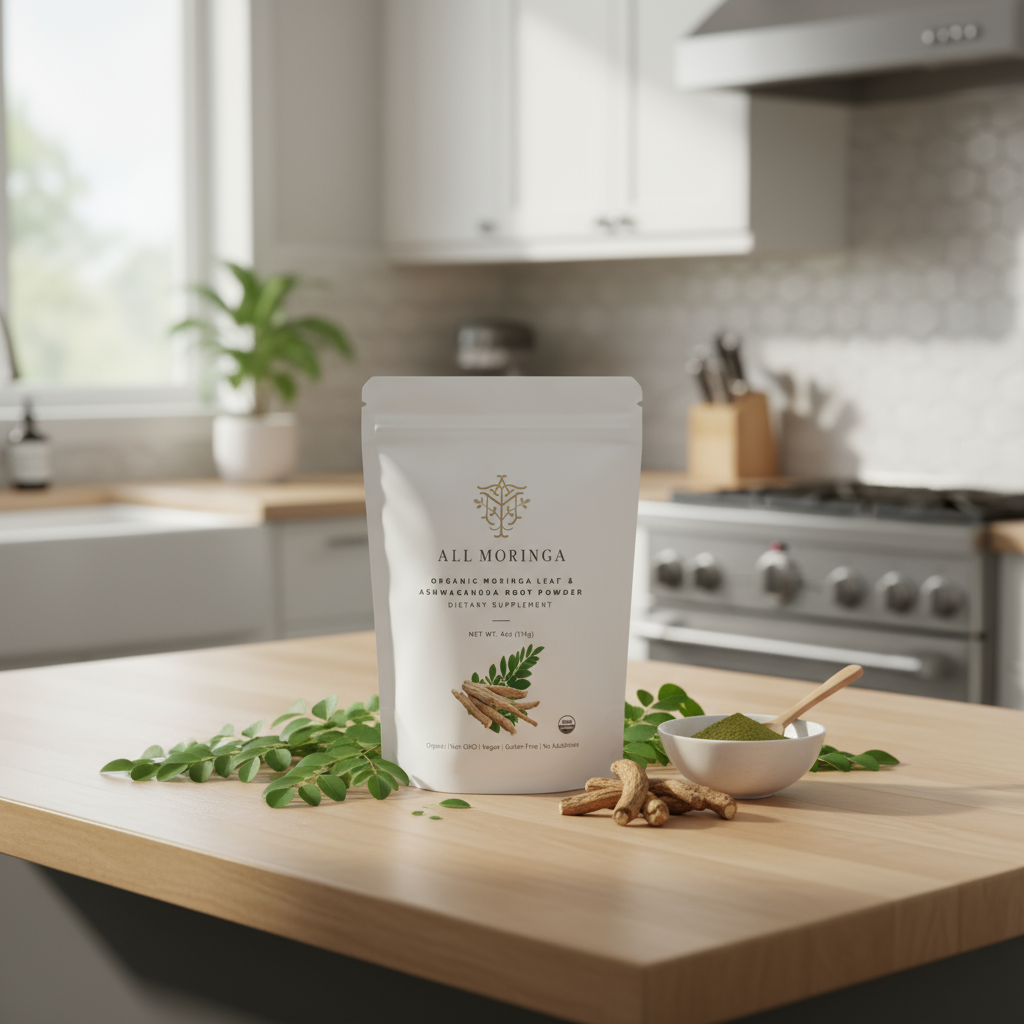
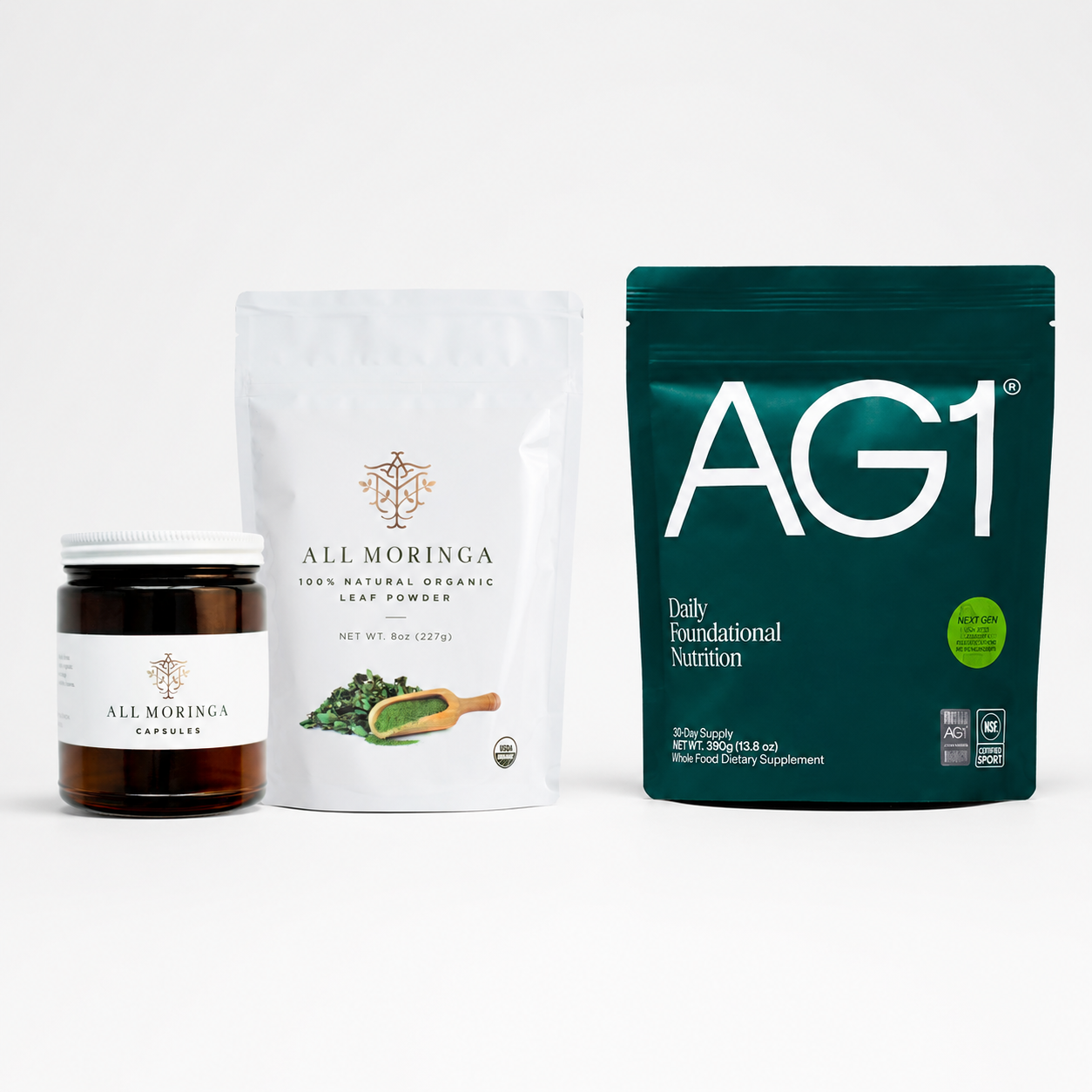
🌿 Explore our Moringa Capsules and Moringa Powder Pouches today: your natural, whole-food multivitamin, from one tree.
To learn more about the benefits of Moringa leaves. Click here.
References
- Leone A, Fiorillo G, Criscuoli F, et al. Nutritional characterization and phenolic profiling of Moringa oleifera leaves grown in Chad, Sahrawi refugee camps, and Haiti. International Journal of Molecular Sciences, 2015. PMC4581279
- Peñalver R, Martínez-Zamora L, Lorenzo JM, Ros G, Nieto G. Nutritional and antioxidant properties of Moringa oleifera leaves in functional foods. Foods, 2022. PubMed 35454694
- Starzyńska-Janiszewska A, Stodolak B, Fernández-Fernández C, et al. Phenolic profile, antioxidant activity and amino acid composition of moringa leaves fermented with edible fungal strains. Foods, 2022. PMC9736034
- Arshad MT, Maqsood S, Ikram A, Gnedeka KT. Recent perspectives on the pharmacological, nutraceutical, functional, and therapeutic properties of Moringa oleifera plant. Food Science and Nutrition, 2025. PMC12003216
- Anwar F, Latif S, Ashraf M, Gilani AH. Moringa oleifera: a food plant with multiple medicinal uses. Phytotherapy Research, 2007. PubMed 17089328
- Pareek A, Pant M, Gupta MM, et al. Moringa oleifera: an updated comprehensive review of its pharmacological activities, ethnomedicinal, phytopharmaceutical formulation, clinical, phytochemical, and toxicological aspects. International Journal of Molecular Sciences, 2023. PMC9916933

*This statement has not been evaluated by the Food and Drug Administration. This product is not intended to diagnose, treat, cure, or prevent any disease.
Leave a comment
This site is protected by hCaptcha and the hCaptcha Privacy Policy and Terms of Service apply.