

Can You Take Moringa and Ashwagandha Together?
One feeds you. The other steadies you.
Yes. Most healthy adults can take moringa and ashwagandha together, and there is no known interaction between them. They do different jobs. Moringa leaf is nutrition: vitamins, minerals, and protein from a whole food. Ashwagandha root is an adaptogen with human clinical trials behind it for the stress response. The exceptions are pregnancy, thyroid conditions, liver conditions, and medications for blood sugar, blood pressure, or sleep. Details are below.

What Does Each Plant Actually Do?
| Moringa leaf | Ashwagandha root | |
|---|---|---|
| What it is | A nutrient-dense leaf, eaten as a food across South Asia and Africa | A root used in Ayurvedic practice, taken as a remedy rather than a food |
| Best known for | Vitamins A and C, iron, calcium, magnesium, protein and essential amino acids | The stress response: cortisol, perceived stress, sleep quality |
| Human evidence | Compositional analyses of what the leaf contains | Randomized placebo-controlled trials, pooled in a 2025 meta-analysis of 15 studies |
| Adaptogen? | No | Yes |
| Taste | Green and grassy, close to matcha | Earthy and bitter |
| How it is usually taken | Daily, like a food | Daily, with trials running up to about three months |
| Main cautions | Thyroid medication, blood sugar and blood pressure medication | Pregnancy, liver conditions, thyroid, sedatives |
Moringa: the nutrition
Moringa oleifera is a fast-growing tree native to the Himalayan foothills of northern India and now grown across South Asia and Africa. The part used in supplements is the leaf, dried and ground.
The leaf is dense with nutrients. A compositional analysis in Metabolism Open (Sultana, 2020) measured meaningful amounts of protein, vitamin C, calcium, and potassium in dried leaves. Reviews in the International Journal of Food Science (Islam et al., 2021) and Current Pharmacology Reports (Patil et al., 2022) add vitamin A, iron, magnesium, B vitamins, and essential amino acids.
Moringa is not an adaptogen. That is exactly why it pairs well with one.
Ashwagandha: the stress response
Ashwagandha (Withania somnifera) is a root used in Ayurvedic practice in India for thousands of years, and it is now one of the most studied botanicals in the world. Its active compounds, withanolides, are thought to act on the hypothalamic-pituitary-adrenal (HPA) axis, the system that controls cortisol release when you are under stress (Sprengel et al., Nutrition & Metabolism, 2025).
The finding holds up at scale. A 2025 meta-analysis in BJPsych Open (Bachour et al.) pooled 15 studies with 873 participants and found significantly lower cortisol and better stress scores with ashwagandha than with placebo. That body of human evidence is why ashwagandha earns the adaptogen label where many herbs only borrow it (NIH Office of Dietary Supplements, 2025).
Why Do Moringa and Ashwagandha Work Well Together?
- Vitamins A and C
- Iron, calcium, potassium, magnesium
- B vitamins
- Protein and essential amino acids
- Not an adaptogenevidence: compositional analyses of the leaf
Chronic stress raises the body's demand for nutrients such as B vitamins, iron, and vitamin C, and moringa leaf supplies several of them. Both plants also come out of the same Ayurvedic tradition, though tradition is a reason people have used them for centuries, not clinical proof.
What Does the Evidence Actually Support?
Energy Human trials: ashwagandha
Moringa leaf contains iron (Patil et al., 2022), which carries oxygen through the body (NIH Office of Dietary Supplements), along with B6 and folate. Low iron is one of the most common causes of fatigue worldwide. Ashwagandha works differently: it is not a stimulant, and in trials its effects on stress and well-being built up over weeks, not hours.
Stress Human trials: ashwagandha
This is ashwagandha's strongest ground: lower cortisol and better stress scores across the 15 studies in the 2025 BJPsych Open meta-analysis.
Oxidative stress Lab and animal research
Moringa leaf contains isothiocyanates and polyphenols that support antioxidant enzyme activity in laboratory and animal studies. Human outcomes have not been established.
Sleep Human trials: ashwagandha
In a double-blind, placebo-controlled trial in Cureus (Langade et al., 2019), 60 adults with insomnia and anxiety took 300 mg of ashwagandha root extract twice a day, or a placebo, for 10 weeks. The ashwagandha group fell asleep faster and reported better sleep quality. Moringa adds magnesium (Patil et al., 2022), a mineral involved in nerve and muscle function, though moringa itself has not been studied for sleep in humans.
Does Moringa Lower Cortisol?
This question comes up constantly, and the honest answer is short. Searches for moringa and cortisol have shown our pages to people hundreds of times in the last six months, and we would rather answer it plainly than let the internet fill the gap.
What exists for moringa is animal and laboratory work, including veterinary studies in livestock. Useful for researchers, but it does not tell you what a teaspoon of leaf powder does to cortisol in a person. No human trial has measured it.
Ashwagandha is the opposite. Cortisol is the outcome its trials were built around, which is the finding described earlier on this page: a 27.9% fall from baseline over 60 days, against 7.9% on placebo, and significantly lower cortisol across the 15 pooled studies.
So in a blend of the two, the cortisol research rides on the ashwagandha. The moringa is there for the nutrition, and it is genuinely good at that.
How to Take Moringa and Ashwagandha Together
How much: one teaspoon a day, as directed on the label. If either plant is new to you, start with half a teaspoon for the first few days.
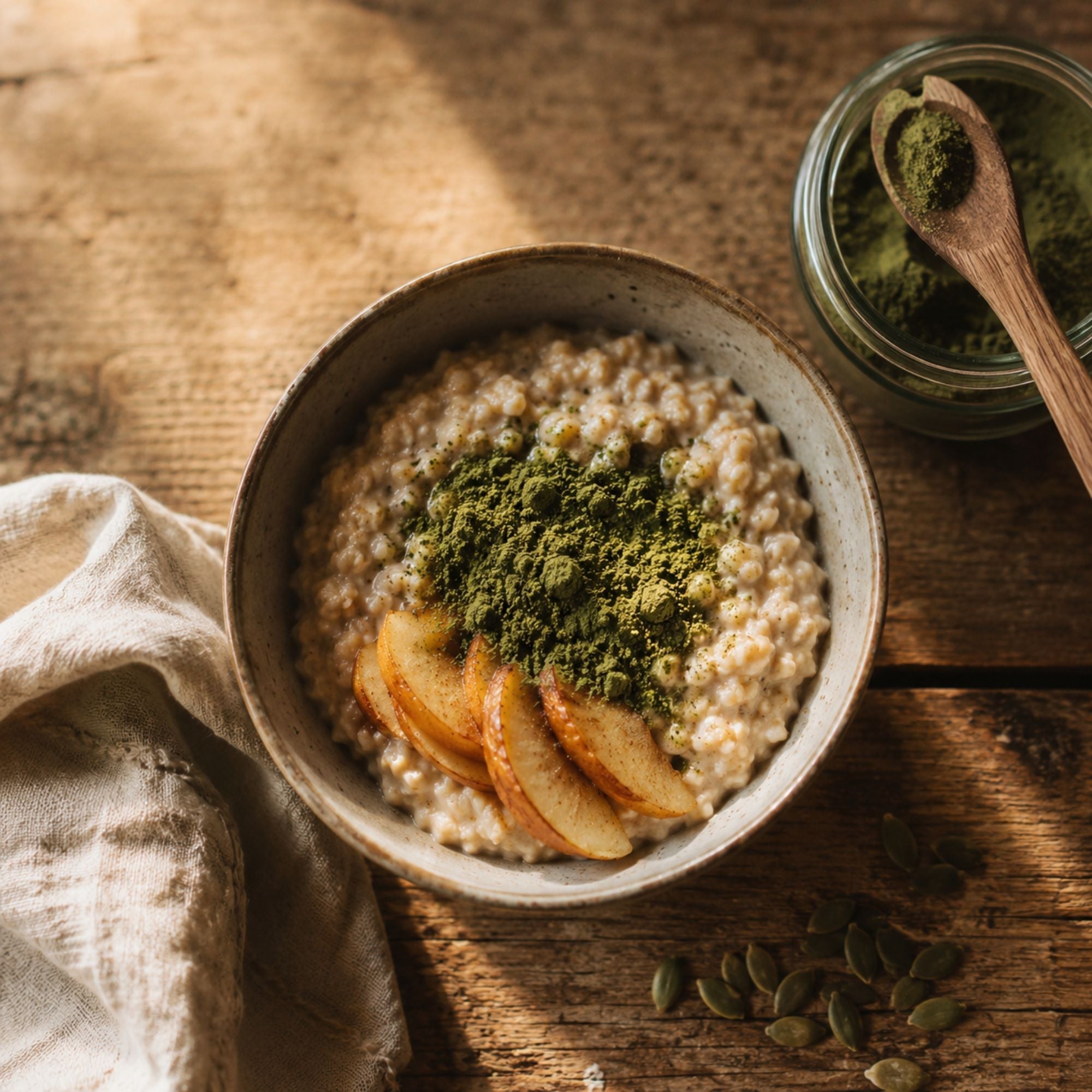
How: stir it into warm water, a smoothie, oatmeal, or oat or almond milk. It is caffeine-free, so it works at any time of day.
When: many people take it in the morning as part of breakfast. Others take it in the evening with a warm drink, because of ashwagandha's sleep research. Pick the time you will stick with, since ashwagandha's effects in studies built up over weeks of daily use.
What is in the blend, and what is not
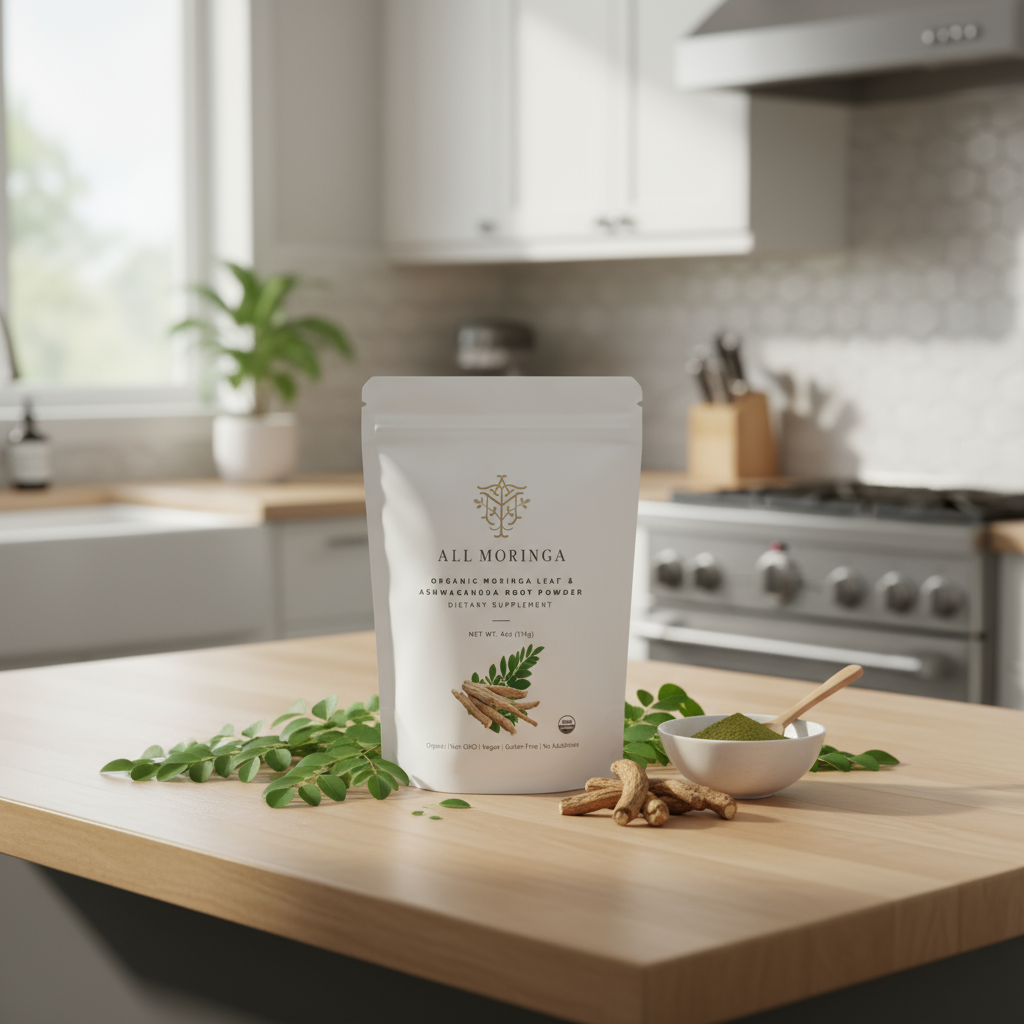
Two ingredients: organic moringa leaf, sourced from India, and organic ashwagandha root. No fillers, no flow agents, no sweeteners, no caffeine, nothing to bulk out the scoop. A two-ingredient label is the easiest kind to check, which is the point.
Who Should Be Cautious?
Pregnant or breastfeeding. Skip both without medical guidance. Moringa may affect uterine contractions, and experts advise against ashwagandha in pregnancy because of reports linking it to miscarriage (NIH ODS, 2025).
Thyroid medication. Both plants matter here. Moringa may affect thyroid hormone levels and the absorption of levothyroxine. Ashwagandha may raise thyroid hormone levels and might interact with thyroid medication (NIH ODS, 2025).
Blood sugar or blood pressure medication. Moringa may lower both, and ashwagandha might interact with drugs for diabetes and hypertension. Together they could push your levels too low.
Sedatives or sleep medication. Ashwagandha might interact with sedatives, including benzodiazepines (NIH ODS, 2025).
Liver conditions. A small number of liver injury cases have been reported with ashwagandha supplements, some in people with existing liver disease (NIH ODS, 2025). Stop and seek care if you notice yellowing skin or eyes, dark urine, or unusual fatigue.
Surgery coming up. Certain dietary supplements "may increase the risk of bleeding or affect your response to anesthesia" (NIH National Center for Complementary and Integrative Health). Tell your surgeon what you take, well before the date.
Autoimmune conditions or immunosuppressants. Both plants may affect immune function.
Hormone-sensitive prostate cancer. Experts advise against ashwagandha (NIH ODS, 2025).
Frequently Asked Questions
A Note from Tzvi
We made our Moringa and Ashwagandha Powder as two ingredients and nothing else: organic moringa leaf, sourced from India, and organic ashwagandha root. No fillers, no sweeteners, no caffeine. Fewer ingredients means you always know exactly what you are taking, and one scoop means the habit is easy to keep.
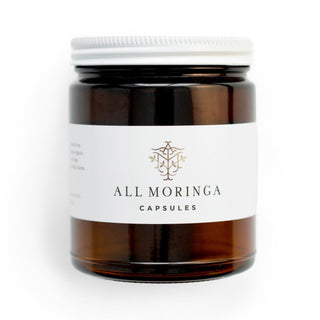
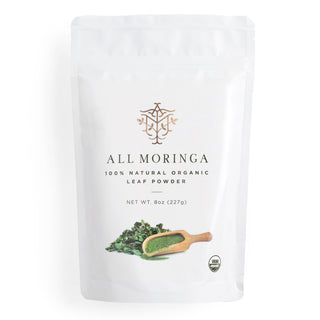
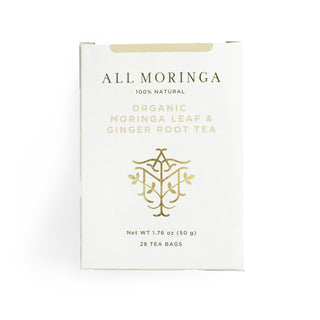
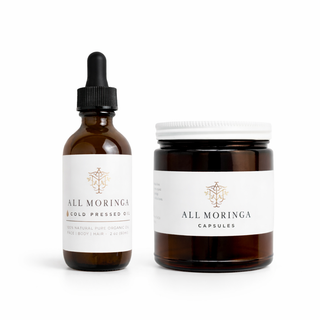
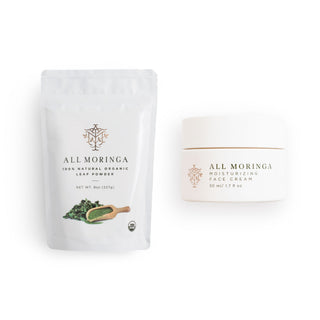
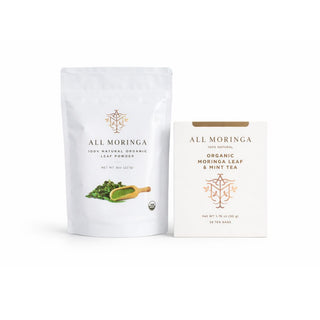
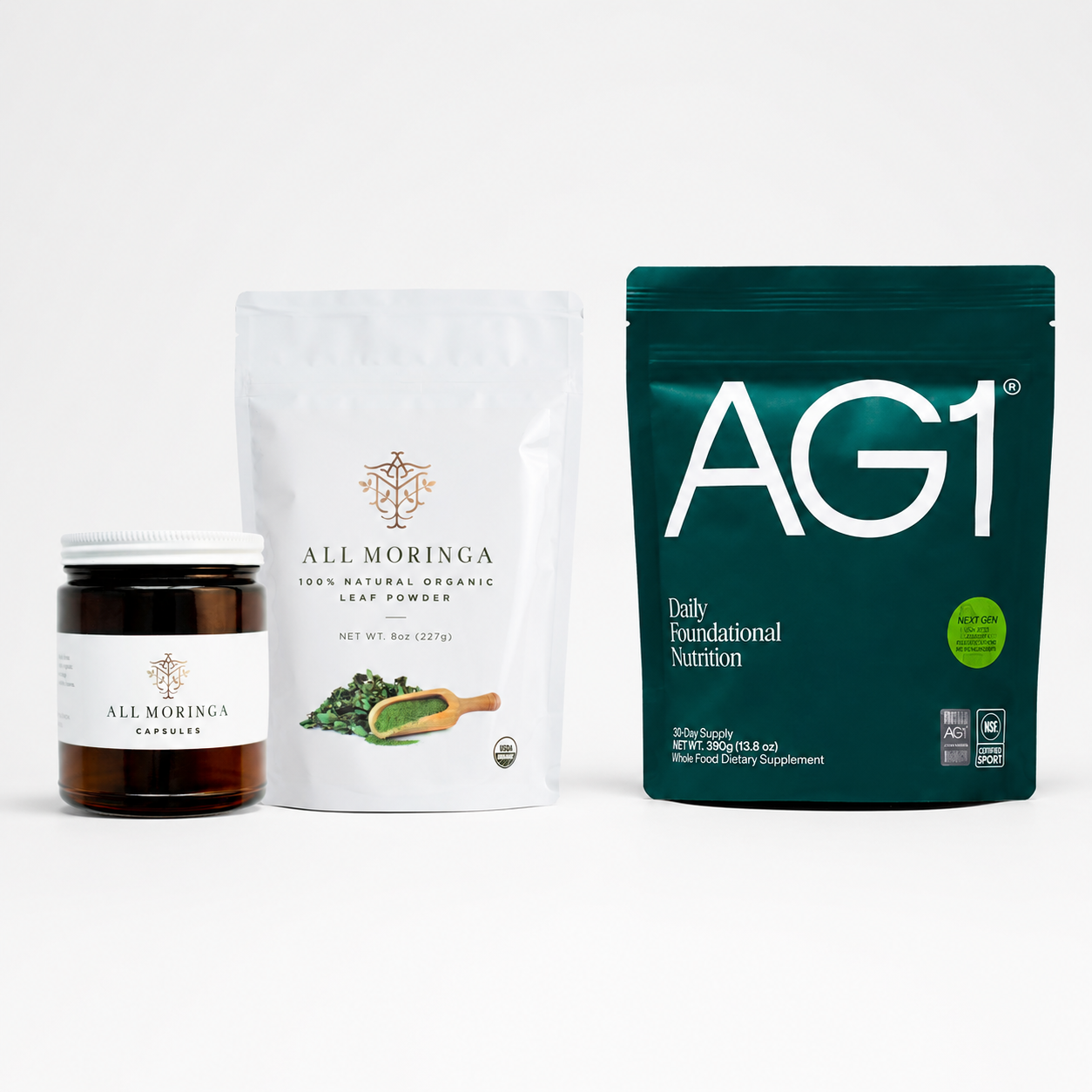
Many of our customers pair the blend with a warm cup of our Moringa and Ginger Tea, the product most often ordered alongside it. And if you ever want moringa on its own, our Moringa Leaf Powder and Moringa Capsules are the same organic leaf in its simplest form.
Both plants, one simple scoop
Organic moringa leaf and organic ashwagandha root in one caffeine-free scoop. Two ingredients, nothing added.
With care, Tzvi & the All Moringa Family
References
- Chandrasekhar K, Kapoor J, Anishetty S. A prospective, randomized double-blind, placebo-controlled study of safety and efficacy of a high-concentration full-spectrum extract of ashwagandha root in reducing stress and anxiety in adults. Indian Journal of Psychological Medicine. 2012;34(3):255-262. PMC3573577
- Bachour G, Samir A, Haddad S, Houssaini M, El Radad M. Effects of Ashwagandha Supplements on Cortisol, Stress, and Anxiety Levels in Adults: A Systematic Review and Meta-Analysis. BJPsych Open. 2025. PMC12242034
- Sprengel M, Laskowski R, Jost Z. Withania somnifera (Ashwagandha) supplementation: a review of its mechanisms, health benefits, and role in sports performance. Nutrition & Metabolism. 2025. PMC11800443
- Langade D, Kanchi S, Salve J, et al. Efficacy and Safety of Ashwagandha (Withania somnifera) Root Extract in Insomnia and Anxiety: A Double-blind, Randomized, Placebo-controlled Study. Cureus. 2019. PMC6827862
- Islam Z, Islam SMR, Hossen F, et al. Moringa oleifera is a Prominent Source of Nutrients with Potential Health Benefits. International Journal of Food Science. 2021. PMC8373516
- Sultana S. Nutritional and functional properties of Moringa oleifera. Metabolism Open. 2020. PMC7596288
- Patil SV, Mohite BV, Marathe KR, et al. Moringa Tree, Gift of Nature: a Review on Nutritional and Industrial Potential. Current Pharmacology Reports. 2022. PMC9108141
- National Institutes of Health, Office of Dietary Supplements. Ashwagandha: Health Professional Fact Sheet. Updated May 2025. ods.od.nih.gov
- National Center for Complementary and Integrative Health (NIH). Using Dietary Supplements Wisely. nccih.nih.gov
- National Institutes of Health, Office of Dietary Supplements. Iron: Fact Sheet for Consumers. ods.od.nih.gov
These statements have not been evaluated by the FDA. This product is not intended to diagnose, treat, cure, or prevent any disease. The information in this article is for educational purposes only and is not a substitute for professional medical advice. Always consult your healthcare provider before starting any new supplement routine.

*This statement has not been evaluated by the Food and Drug Administration. This product is not intended to diagnose, treat, cure, or prevent any disease.
Leave a comment
This site is protected by hCaptcha and the hCaptcha Privacy Policy and Terms of Service apply.