

What Does Moringa leaves and seed oil Do for Your Skin?
Skincare & Nutrition
What Moringa Really Does for Your Skin: The Complete Inside-Out Guide
Before there were face creams with 47 ingredients, there was one tree.
For thousands of years across South Asia, West Africa, and the Caribbean, the Moringa oleifera tree has been part of skin rituals. The leaf consumed inside. The pressed seed oil applied outside. One tree. Both directions at once. Before modern skincare invented the concept of inside-out beauty, moringa was already living it.
This is not coincidence. It is what whole-plant skin nutrition looks like when nothing has been extracted, isolated, or synthetically replaced.
This guide covers exactly what moringa does for your skin, from leaf to seed, with every nutrient named and every claim labeled honestly. If you have been searching for an answer that goes beyond the usual vitamin C list, this is it.
- ●From within (moringa leaf consumed daily): A complete skin nutrition profile including vitamins A, C, E, and the full B complex; a mineral map covering zinc, iron, copper, magnesium, calcium, manganese, and potassium; all nine essential amino acids including the collagen-building pair glycine and proline; flavonoids, isothiocyanates, chlorophyll, and a layered antioxidant system; and prebiotic fiber that feeds the gut-skin axis.
- ●From outside (moringa seed oil applied topically): Oleic acid at up to 73% of its fatty acid profile, behenic acid, phytosterols, and vitamin E, working together to nourish and protect the skin's surface lipid barrier.
- ●How they work together: Two entirely separate pathways from the same tree. The leaf feeds skin from within. The seed oil supports the surface. Neither replaces the other. Both together is the inside-out approach.
How Does Moringa Work for Your Skin?
Healthy skin begins beneath the surface. The proteins, vitamins, and minerals your body uses to build and repair skin tissue come from what you eat and absorb. At the same time, what you apply to your skin directly influences moisture retention, barrier integrity, and how the surface responds to its environment.
Moringa addresses both.
According to USDA FoodData Central, dried moringa leaf powder is a source of vitamin A, vitamin C, vitamin E, iron, calcium, and all nine essential amino acids. These nutrients feed the skin's internal machinery. Moringa seed oil, cold-pressed from the seeds of the same tree, contains oleic acid, behenic acid, and vitamin E. Applied to the skin, these compounds support the skin's surface barrier through pathways that have nothing to do with what the leaf does internally.
One tree. Two plant parts. Two completely different mechanisms. Both working for your skin.
What Moringa Leaf Provides as Skin Nutrition
When you add Moringa Leaf Powder or Moringa Capsules to your daily routine, you are not adding one nutrient to one pathway. You are giving your skin a complete nutrition system. Below is the full picture, with nothing left out.
The Complete Vitamin Profile
According to USDA FoodData Central, dried moringa leaf powder contains vitamins A (as beta-carotene), C, E, and a range of B vitamins including riboflavin (B2), niacin (B3), pyridoxine (B6), biotin (B7), and folate (B9).
Vitamin C is recognized by nutritional science as essential for collagen biosynthesis, the enzymatic process by which the body assembles collagen from amino acids. Without adequate vitamin C, collagen production stalls regardless of how many structural amino acids are available.
Vitamin A, as beta-carotene, supports normal skin cell turnover, the cycle by which old skin cells shed and new ones form. Beta-carotene from food is converted to vitamin A by the body as needed, making it a gentler whole-food source than synthetic derivatives.
Vitamin E is a lipid-soluble antioxidant whose role in protecting biological membranes from oxidative damage is described in biochemistry references including Free Radical Biology and Medicine.
The B vitamins each contribute specific functions to skin nutrition. Riboflavin (B2) supports cellular energy production, which every skin cell requires for its normal renewal cycle. Niacin (B3) is converted by the body into NAD+, a molecule central to cellular energy and DNA repair, both active in the skin's outer layers. Pyridoxine (B6) supports amino acid metabolism, connecting it directly to the protein synthesis pathways that produce collagen and other structural skin proteins. Biotin (B7) is widely associated in nutrition research with skin, hair, and nail health. Folate (B9) is required for DNA synthesis and healthy cell division, the foundation of skin cell renewal.
One plant. The complete vitamin picture that skin nutrition depends on. Not just A, C, and E.
The Full Mineral Map: Where Most Guides Stop Short
Most moringa articles mention zinc and iron, then move on. The full mineral profile for skin nutrition is significantly more complete, and the missing minerals matter. According to USDA FoodData Central and a comprehensive mineral analysis of Moringa oleifera published in Discover Chemistry (Springer Nature, 2025), dried moringa leaf contains all of the following:
| Mineral | Role in Skin Nutrition |
|---|---|
| Zinc | Supports skin cell production and sebum regulation. Involved in wound response and maintaining skin tissue integrity. Identified as a key skin mineral in reviews in the Journal of the American Academy of Dermatology. |
| Iron | Supports hemoglobin production, the protein that carries oxygen in red blood cells. Every skin cell depends on adequate oxygen delivery for normal renewal and repair. Moringa provides iron and vitamin C in the same leaf, a natural pairing that supports iron absorption. |
| Copper | Required for lysyl oxidase, the enzyme that cross-links collagen and elastin fibers into their final tensile structure. Vitamin C activates collagen assembly. Amino acids are the building blocks. Copper is what weaves them together. Without adequate dietary copper, collagen cannot form the strong, interlocking matrix that resilient skin depends on. |
| Magnesium | Involved in over 300 enzymatic reactions including those regulating cellular energy production and inflammatory signaling. Skin cells rely on magnesium-dependent enzymes throughout their normal renewal cycle. |
| Calcium | Plays a role in regulating keratinocyte differentiation, the process by which skin cells mature and form the outer protective layer. Dried moringa leaf is a meaningful source of calcium (USDA FoodData Central). |
| Potassium | Supports cellular hydration by regulating fluid balance inside and outside cells. Properly hydrated cells are the foundation of skin suppleness and resilience. |
| Manganese | A co-factor for superoxide dismutase (MnSOD), one of the body's primary antioxidant enzymes. This enzyme operates inside mitochondria and neutralizes free radicals at their source before they can damage skin cell membranes or DNA. |
Amino Acids: Your Skin's Structural Raw Materials
According to USDA FoodData Central, dried moringa leaf powder contains all nine essential amino acids, making it a complete plant protein. This is uncommon in plant-based foods and nutritionally significant for skin.
Amino acids are the building blocks of every structural protein in the body. Collagen, elastin, and keratin, the three proteins that give skin its architecture, are assembled from amino acids. The body produces these proteins only when the raw materials are consistently available.
Of particular importance, moringa leaf provides glycine and proline. Glycine makes up approximately one-third of collagen's entire amino acid structure. Proline is converted by the body to hydroxyproline, a modified amino acid that stabilizes the collagen triple helix, the spiral structure that gives collagen its tensile strength. Both must come from the diet because the body cannot synthesize them in the quantities that active collagen production demands.
Vitamin C without adequate glycine and proline cannot produce collagen. Amino acids without vitamin C to activate assembly cannot produce collagen either. Moringa leaf provides both, along with the copper needed to cross-link the final structure. This is the complete collagen-support picture that no single supplement category can offer.
The Antioxidant System: Chlorophyll, Flavonoids, and Isothiocyanates
Moringa leaf's antioxidant protection goes well beyond vitamins C and E. The leaf delivers a layered system that operates across three distinct mechanisms simultaneously.
Moringa's deep green color comes largely from its chlorophyll content, the same light-capture molecule that powers the plant's life. In the body, chlorophyll contributes to the overall antioxidant capacity of the leaf, working alongside the other protective compounds.
Moringa leaves contain flavonoids including quercetin, kaempferol, rutin, and chlorogenic acid. These polyphenolic compounds have been studied in laboratory research for their ability to inhibit matrix metalloproteinases (MMPs), the enzymes that break down collagen fibers when overactivated by UV radiation and chronic inflammation. Research published in PLOS ONE and Food and Chemical Toxicology has examined these mechanisms in cell culture models.
The MMP-inhibiting effects of quercetin and kaempferol from moringa have been observed in cell culture models. These are laboratory findings, not confirmed human clinical outcomes. They point to a biologically plausible mechanism for collagen preservation that warrants further human research.
Moringa's most studied isothiocyanate, moringin, has been examined in laboratory and animal research for its ability to activate the Nrf2 pathway, the body's internal antioxidant defense system. When Nrf2 is activated, skin cells are prompted to produce their own protective enzymes: superoxide dismutase, catalase, and glutathione peroxidase. These enzymes neutralize free radicals inside the cell itself, far more powerfully than any single dietary antioxidant alone. Research published in Oxidative Medicine and Cellular Longevity and Nutrients has examined this mechanism.
Moringa leaf also contains zeatin, a cytokinin found in concentrations higher than virtually any other studied plant (Journal of Plant Growth Regulation). In cell culture research, zeatin has been studied for its effects on cellular renewal signaling.
The Nrf2-activating properties of moringa isothiocyanates and the cellular renewal effects of zeatin are based on laboratory and animal research. As of 2026, no large-scale human clinical trial has studied these mechanisms specifically in skin. The research direction is active and growing.
The Gut-Skin Connection
Moringa leaf contains dietary fiber. Fiber from plant foods reaches the large intestine and serves as prebiotic food for beneficial gut bacteria. These bacteria ferment the fiber and produce short-chain fatty acids (SCFAs) including butyrate, propionate, and acetate, which travel through the bloodstream and communicate with other organs throughout the body, including the skin.
Research published in the Journal of Investigative Dermatology and Frontiers in Microbiology has found that SCFAs help regulate the skin's inflammatory response. Butyrate in particular has been studied for its role in supporting skin barrier integrity and reducing inflammatory signaling in skin cells. The gut-skin axis, the two-way communication system between the digestive system and the skin, is well-established in current microbiome and dermatology research.
When you consume moringa leaf daily, the fiber it contains feeds a healthy gut environment. This is an indirect but biologically real path by which moringa leaf supports skin, working through the microbiome rather than through direct cellular nutrition.
What Moringa Seed Oil Does for Your Skin
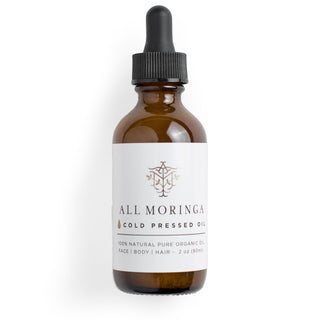
Pure Moringa Seed Oil is cold-pressed from moringa seeds. It is a distinct product from the leaf with a different composition suited entirely to topical use. The benefits below apply to the seed oil specifically, not to the leaf.
Moringa seed oil contains oleic acid at up to 73% of its fatty acid profile. Oleic acid is the predominant fatty acid in human sebum and a recognized component of the skin's natural lipid barrier, as described in the International Journal of Cosmetic Science. When applied topically, oleic acid helps replenish the skin's surface lipids, supporting the barrier that retains moisture and resists environmental irritants. This close alignment between moringa seed oil and the skin's own lipid profile is one of the reasons the oil absorbs readily without a greasy feel.
Moringa seed oil also contains behenic acid, recognized as a skin and hair conditioning agent in the International Cosmetic Ingredient Dictionary (INCI/CosIng); beta-sitosterol, a phytosterol recognized as a skin-active compound in International Journal of Cosmetic Science literature, supportive of the skin barrier; and vitamin E, which protects surface lipids from oxidative breakdown when applied topically and is classified as a skin-conditioning antioxidant in the International Cosmetic Ingredient Dictionary.
The skin literally recognizes moringa seed oil. When a topical oil's fatty acid profile mirrors the skin's own lipid composition, the surface absorbs it as a compatible resource rather than treating it as a foreign substance. This is what whole-plant skincare means at the molecular level.
What Does the Research Show? Human Study
Every other moringa skincare product uses either the leaf or the seed. Not both. The leaf and the seed are different parts of the plant with completely different compositions and different roles for skin. For decades, you had to choose.
Our Moringa Leaf + Seed Synergy Oil was formulated to end that compromise. Cold-pressed seed oil (oleic acid, behenic acid, phytosterols, vitamin E) for the surface. Moringa leaf extract (zeatin, quercetin, kaempferol, isothiocyanates) for deeper nourishment. The full moringa plant — expressed as a single topical oil for the first time.
Born from eight jars in a sunlit kitchen. From Tzvi and Maya, for skin that deserves the whole tree.
Moringa vs. Collagen Supplements: What Is the Difference?
This is one of the most frequently asked questions about moringa and skin nutrition, and it deserves an honest answer rather than a promotional one.
Collagen supplements, whether in powder, capsule, or liquid form, typically contain hydrolyzed collagen peptides sourced from bovine, fish, porcine, or other animal sources. When consumed, these peptides are broken down by digestion and the amino acids reassembled by the body as needed.
Moringa leaf does not contain collagen. What it contains is the complete nutritional system the body uses to build and maintain its own collagen:
| What Collagen Production Needs | What Moringa Leaf Provides |
|---|---|
| Vitamin C (activates collagen biosynthesis) | Yes, from whole food (USDA FoodData Central) |
| Glycine and proline (structural building blocks) | Yes, all nine essential amino acids present |
| Copper (cross-links collagen via lysyl oxidase) | Yes (USDA FoodData Central; Discover Chemistry, Springer 2025) |
| Zinc (supports skin cell production and wound response) | Yes (USDA FoodData Central) |
| Flavonoids that may protect collagen from MMP-driven breakdown | Yes (quercetin, kaempferol, rutin; lab research) |
| Animal-derived collagen peptides | No. Moringa is entirely plant-based. |
Collagen supplements provide finished peptides for the body to disassemble and reassemble. Moringa leaf provides the complete nutritional inputs that make the body's own collagen production possible and supports protection of existing collagen from breakdown.
There is no single correct answer to which approach is better. They operate at different points in the same process. What moringa leaf offers that no collagen supplement can replicate is the full-spectrum antioxidant, mineral, and enzyme-activation support that surrounds the entire collagen-building process. That breadth is what whole-plant skin nutrition means.
For those seeking a plant-based, whole-food approach to skin nutrition that works across multiple mechanisms simultaneously, moringa leaf is a complete and meaningful choice. The body recognizes it as food. That recognition matters.
How to Use Moringa for Your Skin
For Skin Nutrition From Within
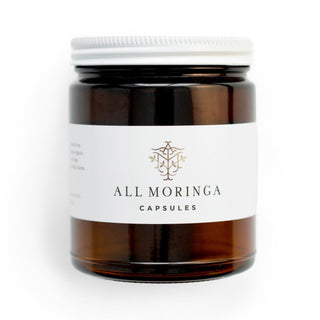
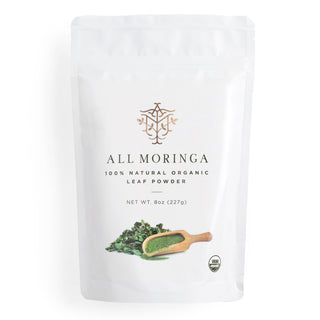
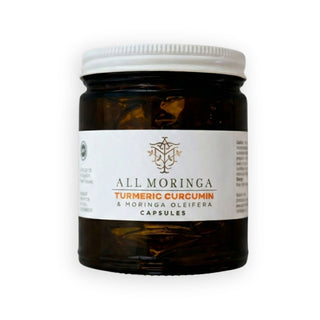
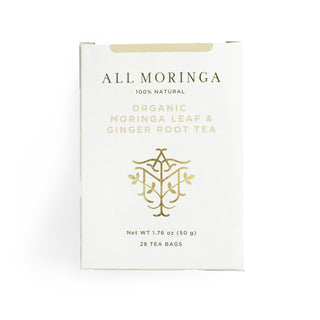
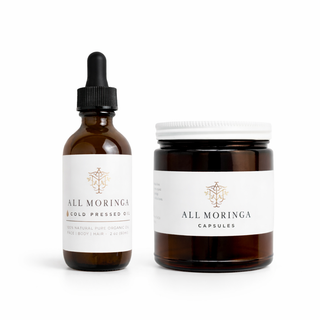
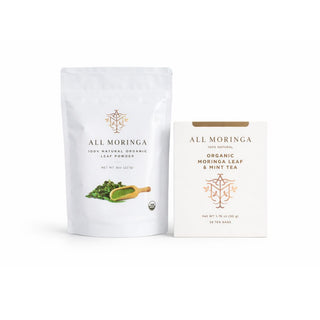
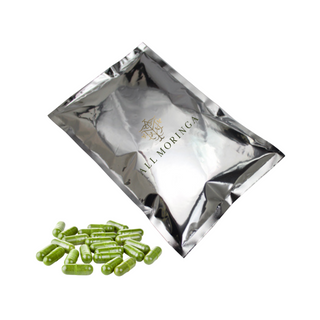
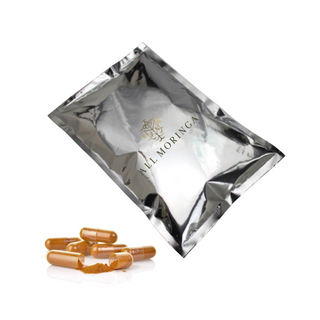
Add one teaspoon of Moringa Leaf Powder to a smoothie, water, or food each morning. Or take two Moringa Capsules with a meal for a no-preparation option. Skin nutrition responds to consistent daily use over time, not to single doses.
For Topical Surface Support
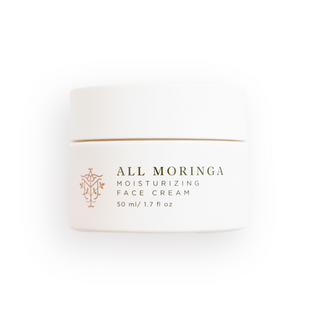
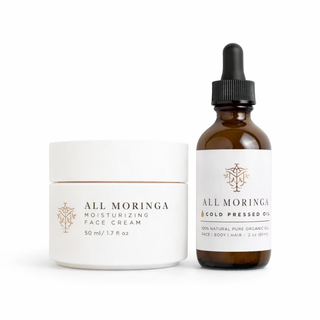
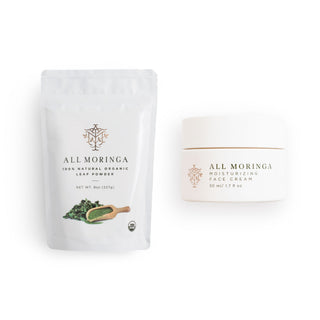
Apply three to five drops of Pure Moringa Seed Oil to clean skin on your face, neck, or body. It absorbs readily due to its oleic acid profile. Use it alone as a facial oil, layer it under a moisturizer, or blend a drop into your current cream. Our Moringa Face Cream is formulated with moringa seed oil as its base and designed for everyday morning or evening use.
For Both Pathways at Once
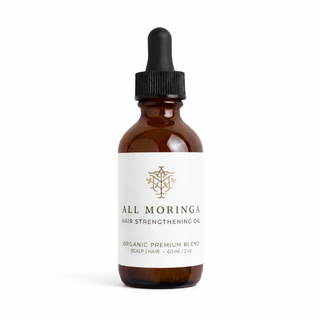
Our Moringa Leaf and Seed Synergy Oil combines moringa leaf extract with cold-pressed seed oil in one formula. The leaf extract brings zeatin and the full flavonoid profile. The seed oil brings oleic acid and barrier-supporting lipids. One product. Both directions. One tree in a single bottle.
For a Weekly Mask
Combine a small amount of moringa leaf powder with water or a few drops of moringa seed oil to form a smooth paste. Apply to clean skin for 10 to 15 minutes, then rinse. This is a traditional application with a long history in Ayurvedic skincare. There is no specific human clinical study confirming outcomes from topical moringa leaf powder use in this form, but the vitamins present in the leaf are available in the preparation.
Frequently Asked Questions About Moringa for Skin
Is moringa leaf better than a collagen supplement for skin?
They work through different mechanisms, not in competition. Collagen supplements provide hydrolyzed animal peptides that the body reassembles. Moringa leaf provides the complete plant-based nutritional environment for the body to build and cross-link its own collagen: vitamin C for biosynthesis activation, glycine and proline as structural amino acids, copper for cross-linking via lysyl oxidase, and flavonoids that may help protect existing collagen. Moringa is fully plant-based; collagen supplements are animal-derived. These statements have not been evaluated by the FDA. This product is not intended to diagnose, treat, cure, or prevent any disease.
Does moringa help with acne?
Moringa leaf contains vitamin A, zinc, and pyridoxine (B6), recognized in nutritional science for roles in skin cell regulation, sebum balance, and amino acid metabolism (USDA FoodData Central). Moringa seed oil is generally considered non-comedogenic for most skin types, meaning it is unlikely to clog pores. No human clinical trial has studied moringa as a direct acne treatment. What moringa leaf nutrients support is the broader skin health conditions associated with well-nourished, balanced skin. These statements have not been evaluated by the FDA. This product is not intended to diagnose, treat, cure, or prevent any disease.
Does moringa seed oil clog pores?
Moringa seed oil is generally considered non-comedogenic. Its oleic acid profile closely mirrors the skin's own natural lipid composition, which supports surface absorption rather than pore congestion. As with any new topical ingredient, patch testing on a small area before full-face use is a sensible first step. Individual skin responses vary.
What is skin nutrition and how does moringa support it?
Skin nutrition refers to the vitamins, minerals, amino acids, and antioxidants the body uses internally to build, repair, and protect skin tissue. Unlike topical skincare, which works on the surface, skin nutrition addresses the raw materials that skin cells use to function. Moringa leaf supports skin nutrition across multiple simultaneous pathways: vitamins for collagen synthesis and antioxidant defense; a full mineral map including copper for cross-linking; complete amino acids for structural protein building; and a layered antioxidant system including flavonoids and isothiocyanates. These statements have not been evaluated by the FDA. This product is not intended to diagnose, treat, cure, or prevent any disease.
Is moringa leaf better than a daily multivitamin for skin?
Moringa leaf powder provides many of the same vitamins and minerals found in standard multivitamins, but in whole-food form the body recognizes as food. It also provides compounds no multivitamin contains: moringa-specific isothiocyanates that activate Nrf2 antioxidant pathways, zeatin cytokinin, moringa flavonoids, prebiotic dietary fiber, and the whole-plant synergy between all of these working together. No synthetic formulation can replicate this. These statements have not been evaluated by the FDA. This product is not intended to diagnose, treat, cure, or prevent any disease.
Does drinking moringa affect your skin?
Yes, through internal skin nutrition. When you consume moringa leaf powder or capsules, your digestive system absorbs the vitamins, minerals, and amino acids the leaf contains. These nutrients enter circulation and are used by skin cells alongside all other cells throughout the body. The gut-skin axis adds a secondary pathway: moringa's prebiotic fiber feeds beneficial gut bacteria, which produce short-chain fatty acids that research published in the Journal of Investigative Dermatology associates with skin barrier support and reduced inflammatory signaling. These statements have not been evaluated by the FDA. This product is not intended to diagnose, treat, cure, or prevent any disease.
Can I take moringa daily for skin?
Moringa leaf powder has a favorable safety profile at typical food-level doses. A 2025 systematic review published in PMC (PMC11782934) noted a generally favorable safety record at standard doses, with adverse effects observed primarily at very high doses in animal studies. If you are pregnant, nursing, managing a medical condition, or taking medication, consult your doctor before beginning. These statements have not been evaluated by the FDA. This product is not intended to diagnose, treat, cure, or prevent any disease.
Does whole moringa leaf powder work better than moringa extract for skin nutrition?
Whole moringa leaf powder is more complete than any extract. Extracts isolate one or two compounds for concentrated study or formulation. Whole leaf powder preserves the full spectrum: vitamins, minerals, flavonoids, isothiocyanates, amino acids, chlorophyll, prebiotic fiber, and zeatin, all working together in the ratios nature produced them. No extract can replicate this synergy. All Moringa products use whole leaf, not isolates or extracts, because we believe the complete plant is more valuable than any of its parts.
One Tree. Every Piece of the Puzzle.
Skincare shelves are full of products built around a single compound. One peptide. One vitamin C serum. One concentrated extract. Each one solving one piece of a much larger picture.
Moringa does not work that way.
The same leaf that provides vitamin C to activate collagen assembly also provides the copper that cross-links those collagen fibers into their final structure. The same leaf that feeds your gut bacteria also delivers the glycine and proline your skin cells use to build structural protein. The same seed that yields a skin-compatible oil provides phytosterols that support that same surface barrier. One plant. Every piece of the collagen puzzle. Every layer of the antioxidant system. Every mineral the skin's daily maintenance depends on.
This is not a list of benefits someone assembled. This is what one complete plant looks like when nothing has been removed.
At All Moringa, we built this brand on one idea: that nature understood skin nutrition before anyone in a laboratory had a chance to improve on it. Our Moringa Leaf Powder and Moringa Capsules give your body the whole-leaf skin nutrition it recognizes as food. Our Pure Moringa Seed Oil and Moringa Face Cream give your skin the barrier-compatible lipids it absorbs. Our Moringa Leaf and Seed Synergy Oil brings both pathways into one formula.
From the inside out. From Tzvi, Maya, and the All Moringa family.
Explore our full moringa skincare collection and find where you want to begin.
Ready to Nourish Your Skin, Inside and Out?
One tree. Two pathways. Complete skin nutrition from leaf to seed. Find your starting point below.

*This statement has not been evaluated by the Food and Drug Administration. This product is not intended to diagnose, treat, cure, or prevent any disease.
Leave a comment
This site is protected by hCaptcha and the hCaptcha Privacy Policy and Terms of Service apply.