

Moringa and Asthma: What the Research Shows, and What It Doesn't
If you searched for moringa and asthma, you have probably found pages promising "natural relief" and a list of ten benefits. This is the honest version: what moringa is, what the research on moringa and asthma actually measured, what it did not, and the safety points that matter if your airways are sensitive.
The short answer: moringa is a nutrient-dense leaf, and it is not an asthma treatment. There is one small human study from 2008 and a handful of animal studies. That is promising enough for researchers to keep looking, and far too little for anyone to swap an inhaler or a prescribed plan for a plant. Keep your medical care exactly as your doctor set it up.
What is moringa?
Moringa oleifera is a fast-growing tree native to the foothills of the Himalayas in India and grown across Africa and Asia, where people have eaten its leaves for generations. The dried leaf is a whole food: it carries vitamins A, C and E, calcium, potassium, iron, protein, and plant compounds such as quercetin and chlorogenic acid. Those are the reasons people eat it. None of them makes it a medicine.
What did the human study on moringa and asthma find?
The only human study we could find was published in the Indian Journal of Pharmacology in 2008 (Agrawal and Mehta). Twenty adults with mild-to-moderate asthma took 3 g of powdered moringa seed kernels for three weeks, and the researchers compared their symptom scores and breathing tests before and after. They reported improvements and no side effects.
Here is why that result cannot tell you moringa works for asthma:
- There was no placebo group, so nobody can separate the effect of moringa from the effect of time, attention, the season, or the participants' regular care.
- It was 20 people for three weeks.
- It used seed kernels, not the leaf powder, capsules or tea most people buy.
- As far as we can find, it has not been repeated in a larger controlled trial in the years since.
What about the animal and lab studies?
Most of the rest of the research is in rats and mice. In these models, moringa leaf and seed extracts were studied for their effect on airway inflammation and allergic responses, for example after exposure to ovalbumin or the industrial chemical toluene diisocyanate. These studies help researchers decide what to test next. They use extracts and doses that are not the same as a spoon of leaf powder, and animal results often do not carry over to people.
Can moringa trigger allergies or breathing problems?
Yes, and this is the part most moringa-and-asthma pages leave out. Researchers at the European Respiratory Society described occupational asthma in workers exposed to moringa seed material in cosmetic manufacturing, and a 2022 study in mice found that moringa leaf proteins could provoke an allergic response. Moringa is a plant, and like any plant some people react to it.
If you have asthma or allergies and want to try moringa as food:
- Talk to your doctor first, especially if you take any regular medication.
- Start with a small amount and stop if you notice itching, wheezing or any change in your breathing.
- Mix powder into liquid rather than tipping it dry, so you do not breathe in the fine dust.
- Never use moringa in place of your inhaler, your action plan or your prescribed medication.
How do people use moringa as everyday food?
If moringa suits you, it is simplest to think of it the way people in India and Africa always have: as a green you eat.
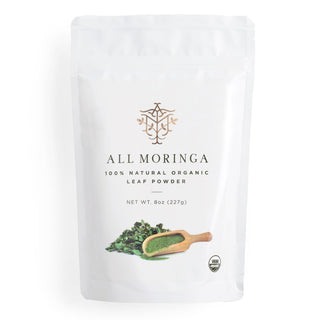
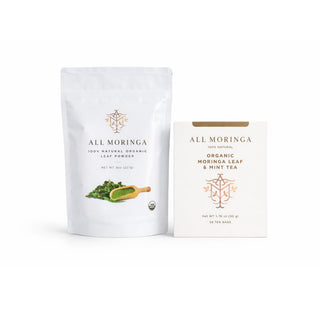
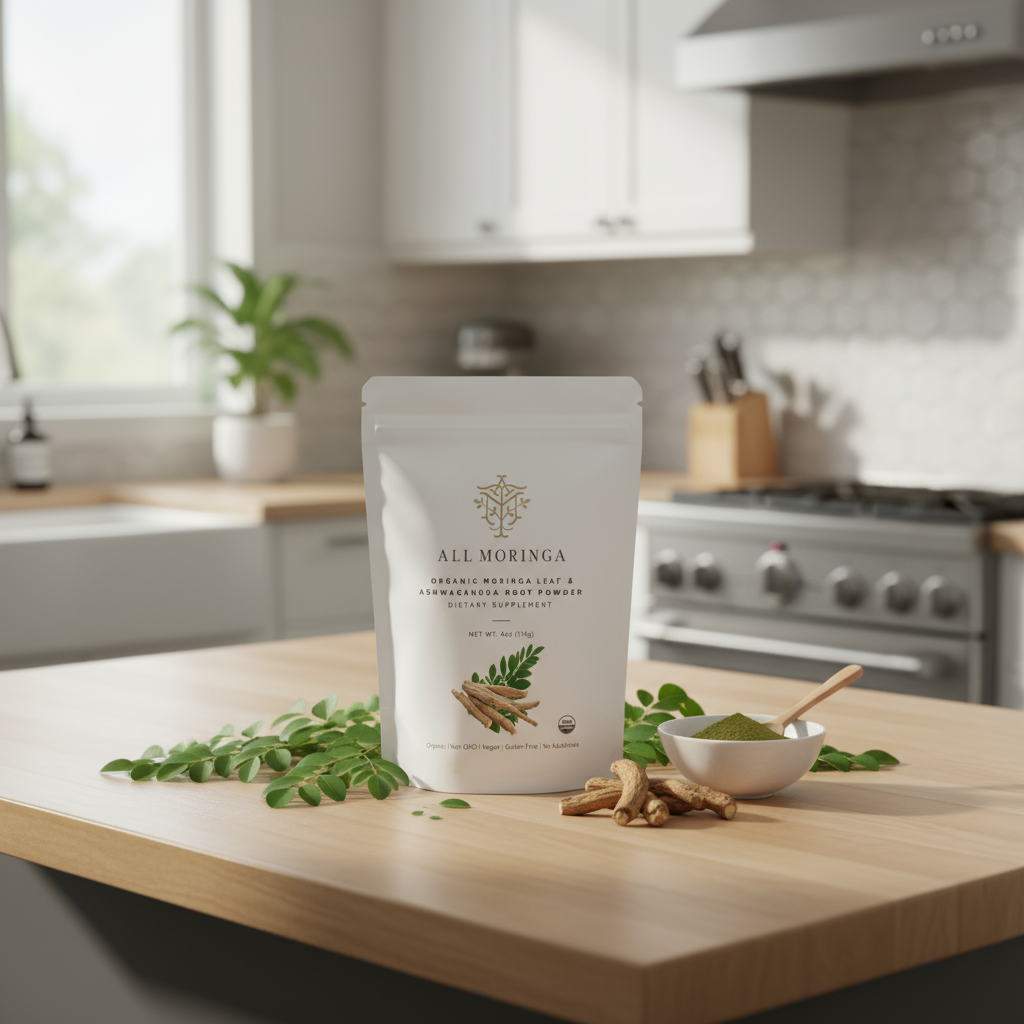
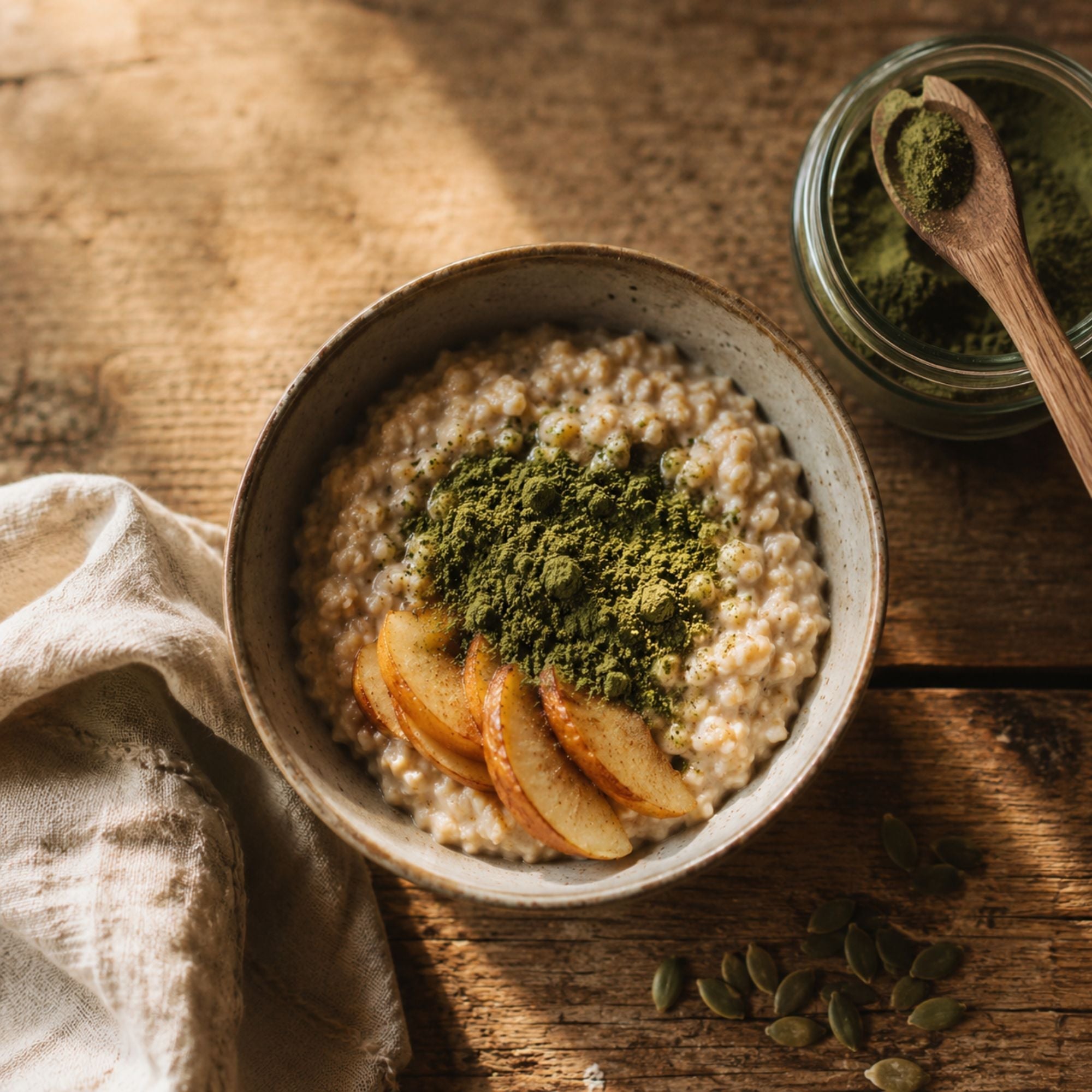
- Moringa Powder: stir half a teaspoon to one teaspoon into a smoothie, oatmeal or a glass of water, and build up slowly.
- Moringa Tea: steep the dried leaves in hot water for 5 to 10 minutes.
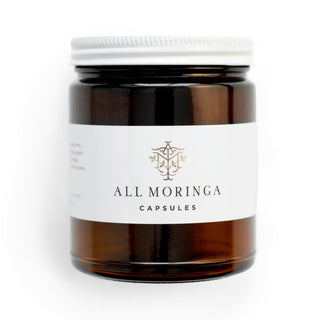
- Capsules: follow the label. Capsules also avoid the fine powder dust.
Pregnant or breastfeeding, giving it to a child, or managing any medical condition? Ask your doctor or pediatrician before you start.
Frequently asked questions
Can moringa replace my asthma medication?
No. Moringa is food. Keep your inhaler, your action plan and your medication exactly as your doctor prescribed them.
Is there proof that moringa helps asthma?
No. There is one small, uncontrolled 2008 study in 20 adults that used seed kernels, plus animal research. That is a reason for more research, not a reason to rely on it.
Is moringa safe for kids with asthma?
There is very little data in children. Ask your pediatrician first.
Can moringa make breathing worse?
It can in people who are sensitive to it. Occupational asthma has been reported in workers exposed to moringa seed material, so start small and stop if anything changes.
The bottom line
We love moringa as a whole-food source of nutrition. We will not tell you it helps asthma, because the evidence does not show that. If breathing is your concern, your doctor is the right first call, and moringa, if you enjoy it, is simply a nourishing green on your plate.
FDA Disclaimer
This article is for informational purposes only and is not intended to diagnose, treat, cure, or prevent any disease. These statements have not been evaluated by the Food and Drug Administration. Always consult a qualified healthcare professional before using any herbal product, especially if you have a medical condition or take medication.
References
- Agrawal B, Mehta A. Antiasthmatic activity of Moringa oleifera Lam: a clinical study. Indian Journal of Pharmacology, 2008. PubMed, full text (PMC)
- Phytochemical analysis and pharmacological evaluation of methanolic leaf extract of Moringa oleifera Lam. in ovalbumin induced allergic asthma (animal study)
- Effect of Moringa oleifera Lam. seed extract on toluene diisocyanate-induced immune-mediated inflammatory responses in rats, Journal of Immunotoxicology (animal study)
- Occupational asthma to Moringa oleifera: first description, European Respiratory Journal (conference abstract)
- Zhang J, et al. Potential allergenicity response to Moringa oleifera leaf proteins in BALB/c mice. Nutrients, 2022.
- Moringa: possible benefits, side effects, and risks, Medical News Today
- Moringa: uses, side effects, precautions, interactions and dosing, WebMD

*This statement has not been evaluated by the Food and Drug Administration. This product is not intended to diagnose, treat, cure, or prevent any disease.
Leave a comment
This site is protected by hCaptcha and the hCaptcha Privacy Policy and Terms of Service apply.